Northbeam vs Polar Analytics
By Dana Rourke, Lead reviewer. Reviewed by Campaign Buyer Editorial. Updated 23 September 2026.
Quick answer
Pick Northbeam if you spend six figures a month across many channels and have an analyst to own multi-touch attribution, media-mix modeling and incrementality; pick Polar Analytics if you run a Shopify or DTC brand doing real GMV and want an affordable, flexible BI layer that centralizes every data source so your team can build its own reports.
Side by side
| Northbeam | Polar Analytics | |
|---|---|---|
| What it is | Modeled attribution engine | Shopify BI + reporting layer |
| How it measures | MTA, MMM and view-through | First-party pixel, directional |
| Deep causal modeling (incrementality) | Yes | No, directional reporting |
| Reporting style | Prebuilt modeled dashboards | Custom dashboards you build |
| Who it needs to run it | An analyst or data owner | A data-literate operator |
| Best-fit buyer | $100k+/mo across channels | $1M to $25M GMV Shopify brands |
| Entry price | $1,500/mo | $750/mo, priced on GMV |
If you are down to Northbeam and Polar Analytics, you have already made the expensive decision. Both are premium attribution tools for a Shopify or DTC brand that spends real money on ads, and both cost more in a month than most of the trackers on this site cost in a year. The question left is not which is better. It is which measurement problem you are trying to solve, because these two solve different ones.
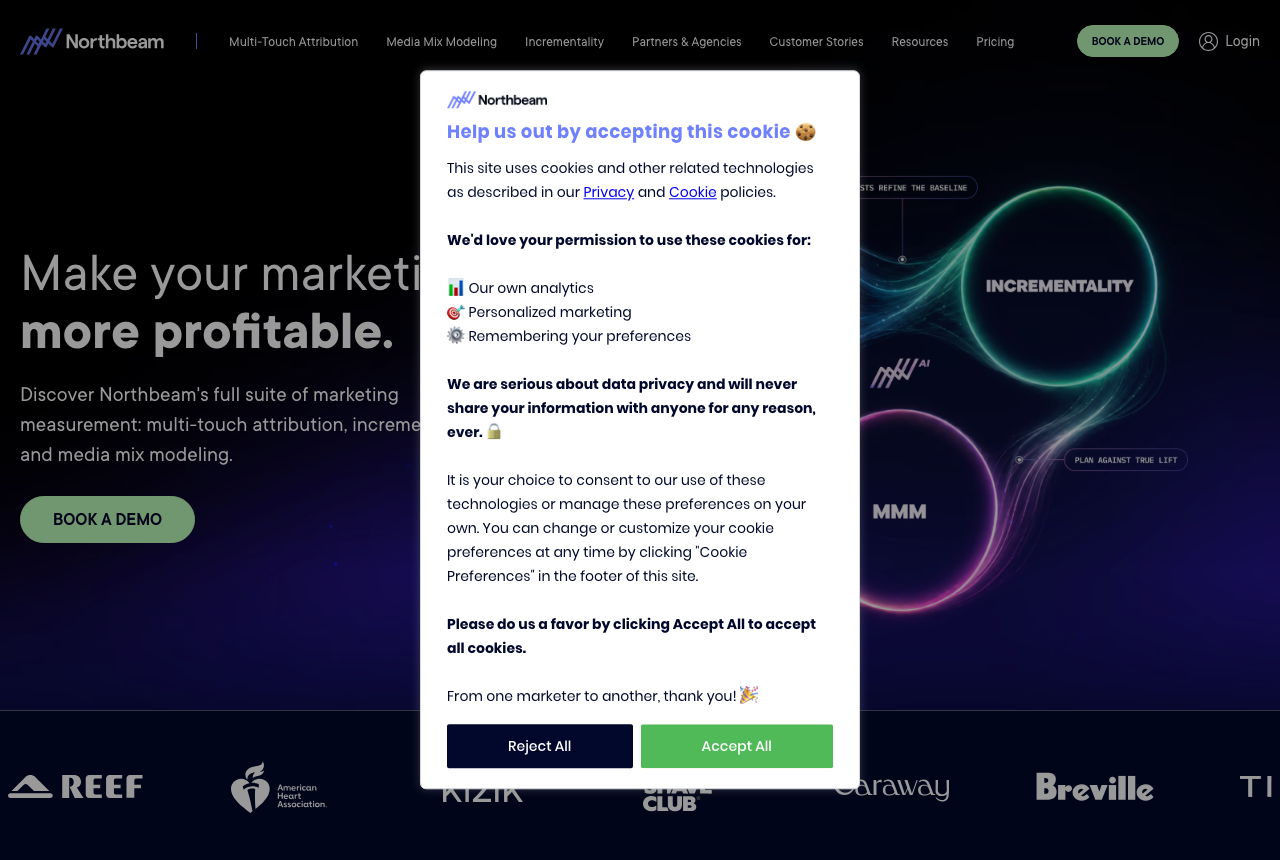
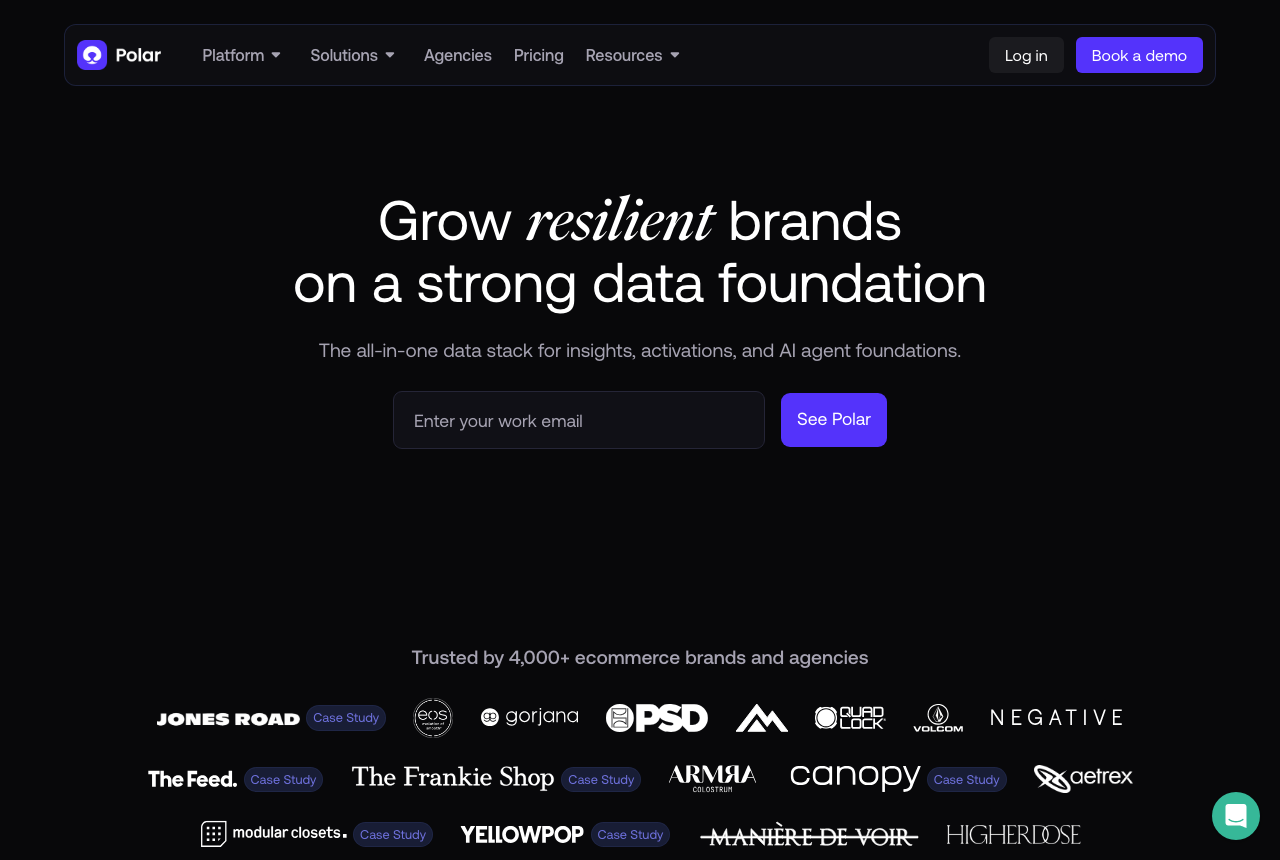
Northbeam is a modeled attribution engine. It blends deterministic clicks with view-through and statistical models, then layers multi-touch attribution, media-mix modeling and incrementality on top to tell a high-spend brand where the next budget dollar should go. Polar Analytics is a business-intelligence layer for Shopify. It centralizes your orders, ad spend, email and SMS data into one place and lets a data-literate operator build their own dashboards, with attribution that Polar itself calls directional. One is a modeling engine. The other is a reporting canvas. The reader stuck between them is really choosing depth of modeling against breadth of reporting.
What each one actually measures
Be precise about the output, because that is the fork. Northbeam gives you a model of your whole media mix: across every channel, here is the share of revenue each one probably drove once view-through, assisted paths and incrementality tests are weighed, and here is where to move budget next. Its strength is the causal question a click count cannot answer. Its blind spot is that a model is an estimate you have to trust rather than a receipt you can audit, and it takes real work to stand up.
Polar gives you a place to see everything at once and slice it yourself. A first-party pixel fed server-side, which Polar is upfront is directional rather than exact, feeds custom reports you assemble across Shopify, the ad platforms and Klaviyo, with unlimited users and full history on the Core plan. Its strength is reporting flexibility and data centralization. Its weakness, by repeated buyer accounts, is that it gets restrictive the moment you need to go deep into custom attribution, where a purpose-built engine does more.
Neither is the whole truth. A brand that needs to know which channel actually caused a sale, so it can move a large budget with confidence, needs the modeling engine. A team that wants every number in one flexible place needs the BI layer. If you know which of those describes your week, you already know which tool this is.
Northbeam: modeled attribution for a large, multi-channel budget
Northbeam is the tool you graduate to when a single point of attribution accuracy is worth thousands of dollars in reallocated spend. It combines first-party click data with modeled and deterministic view-through data, then adds multi-touch attribution, media-mix modeling and incrementality testing. For a brand spending across Meta, Google, TikTok and more, that is a fuller picture than a click tracker or a prebuilt profit dashboard gives you, and it is aimed squarely at the budget-allocation question the other tools here do not try to answer.
That depth comes with a floor, and it is high. Pricing starts at $1,500 a month and rises to $3,500 for Professional, so it only makes sense above a real spend threshold. The bigger risk is adoption, not price. The most common complaint is onboarding: one G2 reviewer described paying for Northbeam and being unable to get it usable. Without an analyst or a data owner to run the models and act on them, it becomes an expensive dashboard nobody opens. Buy it when you have both the spend and the person, not before.
Polar Analytics: a BI layer you build yourself
Polar is the attribution tool for a Shopify brand that has outgrown a fixed dashboard and wants to build its own. It centralizes Shopify, Meta, Google, Klaviyo and the rest into one place, then lets an operator assemble custom reports rather than read a prebuilt template, with unlimited users and full historical data on the Core plan. Its attribution runs off a first-party pixel fed server-side, and Polar is honest that the numbers are directional, with a warm-up period of roughly two weeks and a default lookback window, not a retroactive exact truth. For a Shopify brand doing real GMV that wants reporting flexibility and a team that will use it, that is the draw, and the Shopify App Store rating backs it up at 4.9 across 117 ratings, with setup and data centralization the parts buyers praise most.
The honest cost is money and depth. Core opens at $750 a month and is priced on your GMV, which is why buyers on Reddit call revenue-linked pricing a tax and put a mid-market brand's real bill well into five figures a year. And the recurring critique is that it is strong for visual reporting but gets restrictive once you need deep or custom attribution, where a modeling engine like Northbeam does more. Support is praised overall, but a dedicated success manager only arrives on a $10,000 annual contract, and reviewers below that report slow responses on connector problems.
The price gap tells you who each is for
The sticker difference is real but smaller than it looks against the trackers on this site: Northbeam starts at $1,500 a month, Polar at $750 priced on GMV. Both are premium tools for a brand at real revenue, so the gap is not beginner against pro, it is depth against breadth. Northbeam's price buys a causal modeling engine and assumes the analyst hours to run it. Polar's price buys a flexible reporting layer the whole team can use without a data scientist. If one of those sentences sounds like a cost you would happily pay and the other sounds like money wasted, that is your answer.
Read both numbers on your real usage, not the entry line. Northbeam's $1,500 floor climbs to $3,500 on Professional and scales with your spend and channel count. Polar's is a GMV-scaled commitment, so the figure grows with the store and a smaller shop overpays for it. Verify each against the vendor before you commit, because both move with how much you run through them.
The decision is spend, staffing and how you want to work
Line the two up and the fork is clear. If you spend six figures a month across many channels, the question that keeps you up is where the next budget dollar should go, and you have an analyst to own the model, that is Northbeam. Its multi-touch attribution, media-mix modeling and incrementality are built for exactly that decision, and nothing cheaper here answers it as well. If you run a Shopify or DTC brand doing real GMV, you want every number in one flexible place, and you would rather your team build reports than wait on a data scientist, that is Polar. It is cheaper, faster to adopt, and broader across your data, and its directional attribution is enough for most operating decisions.
For most brands reading this, Polar is the more practical default, and it is why we rank it above Northbeam for an ecommerce brand: usability, price and breadth beat modeling depth you cannot action. Northbeam wins the narrower case, the high-spend brand with an analyst where a point of accuracy moves real budget. Move to it when you have both the spend and the person, and not a month before.
The two are not strictly exclusive. A large brand can run Polar as its reporting layer and Northbeam as its modeling engine, because they answer different questions and overlap less than the price tags suggest. If a budget forces one choice, the deciding facts are your monthly spend and whether you have someone to run a model. Below roughly $100k a month, or without that person, Northbeam's floor and onboarding cost more than the accuracy returns, and Polar is the answer.
Both reward discipline either way. Northbeam's model is only as good as the clean, consistent tagging feeding it, and Polar's attribution is directional and needs its warm-up period before it settles. Whichever you pick, the setup work is yours, and no tool invents accuracy you did not wire up.
A third path if you host the funnel yourself
There is a third answer worth naming, because neither of these tools builds the funnel whose numbers they report. Northbeam models the channels and Polar reads the Shopify store, but both assume the pages and the checkout already live somewhere else. ElasticFunnels is a funnel platform whose analytics and attribution sit on the same data layer as the pages and the checkout it hosts. It builds the landing pages, including an AI builder that generates a page from a prompt or clones one from a URL, runs same-URL split tests so a variant test never changes the campaign link or sends the ad back for review, hosts its own checkout with order bumps and one-click upsells, and reports ad spend against the conversions from the funnels it hosts on one timeline. For a seller who runs their own offer and wants the spend-to-sale number to live where the sale happens, that first-party reporting is a real alternative to bolting an attribution tool onto a separate store. It starts with a 14-day free trial and takes no card.
Two honest limits, stated plainly. It is newer than Northbeam or Polar, and there is very little independent third-party review coverage to check its claims against, so until you run real volume through it you are largely taking the vendor's word for how its reporting holds up. And that reporting covers the funnels it hosts, so a brand measuring traffic that closes on other people's domains, or spread across Shopify and marketplaces, still needs a dedicated attribution tool for that part. Neither limit removes what it does on its own funnels; both just scope where it fits. Keep it on its own line of the decision rather than treating it as a tiebreaker between the two here.
Which one for you
You spend six figures a month across many channels and have an analyst: Northbeam. Multi-touch attribution, media-mix modeling and incrementality are worth the $1,500 floor once a point of accuracy moves real budget, and you have the person to run the model and act on it.
You run a Shopify or DTC brand at real GMV and want flexible reporting your whole team will use: Polar Analytics. Centralized data across Shopify, the ad platforms and email, custom dashboards, and unlimited users and history are worth the $750 entry once a team actually builds on them, provided your revenue justifies the GMV-scaled bill and you accept that the attribution is directional.
You host your own offer and want the spend and the sale in one place: look at ElasticFunnels alongside them, with the newness caveat above in mind, then add a dedicated attribution tool later if your traffic ever closes off your own domains.
Northbeam
What works
- Combines clicks with modeled and deterministic view data for fuller paid-media attribution
- MTA, MMM and incrementality testing in one platform
- Built for the scale where measurement decisions move real budget
What to watch
- Starts at $1,500/mo, so it is not for small brands
- Onboarding is hard; one reviewer paid but could not get the product live
- Becomes expensive shelfware without someone dedicated to run the model
Polar Analytics
What works
- Pulls Shopify, ad platform and email or SMS data into custom dashboards you build yourself, not a fixed template, with unlimited users and historical data on the Core plan
- First-party pixel and server-side tracking, so the numbers survive the browser better than a pixel-only setup
- Rated 4.9 out of 5 across 117 Shopify App Store ratings, with setup and data centralization the most-praised parts
What to watch
- Core opens at $750 a month and is priced on your GMV, so the bill climbs with revenue and a small store overpays
- Buyers report it gets restrictive when you need deep or custom attribution, where Triple Whale goes wider on ecommerce metrics and Northbeam goes deeper on modeling
- A dedicated success manager only arrives at a $10,000 annual contract, and some reviewers below that flag slow support and connector delays
Pricing
Northbeam: from $1,500/mo. Quoted after a demo and tiered by yearly media budget. Published starting rates: Starter from $1,500/mo (brands under $1.5m a year), Professional from $3,500/mo (up to $500k a month); Growth and Enterprise are custom-quoted. Incrementality and MMM+ are optional add-ons. No free trial or free tier.
Polar Analytics: from $750/mo, priced on GMV. Pricing is tiered by annual online GMV and quoted after a demo; the vendor's pricing page publishes no dollar figure. The Core Plan bundles Business Intelligence, Klaviyo Audiences, Advertising Signals and Polar MCP and is stated to save 20% versus buying products individually; a Custom Plan lets you pick products a la carte. Every plan includes a dedicated Snowflake database, the ecommerce semantic layer, a first-party pixel, unlimited users and unlimited historical data, and a dedicated success manager.
Pricing verified against each vendor on 2026-09-23. Check before you buy.
Our pick
Polar Analytics
It is the pick if you run a Shopify store doing real revenue and want to build your own BI dashboards on first-party attribution, rather than live in a prebuilt operator screen. The catch is the bill. Core starts at $750 and is billed on your GMV, so a smaller shop pays more than the data is worth, and reviewers say it tightens up once your attribution needs get deep.
Frequently asked questions
Northbeam or Polar Analytics: which should I use?
Which is cheaper, Northbeam or Polar Analytics?
Do Northbeam and Polar Analytics do the same thing?
Which is better for a brand spending under $100k a month?
Does Polar Analytics do media-mix modeling and incrementality like Northbeam?
Can I use both Northbeam and Polar together?
Sources
Other sources
5 discussions and reviews read for this page. Quotes are excerpts; open a link to read the original in context.
- [fb-juggernaut] TripleWhale vs. Polar Analytics
- [fb-marknine] TripleWhale vs. Polar Analytics
- [fb-founder] TripleWhale vs. Polar Analytics
- [shop-nomastacos] Is it just me, or is the price for some apps getting obscene?
- [shop-nomastacos-gmv] Is it just me, or is the price for some apps getting obscene?

Written by
Dana Rourke
Lead reviewer
Dana Rourke is the lead reviewer at Campaign Buyer. She owns the tracker and attribution coverage: reading what long-term users report about each tool, checking its documentation and pricing, and verifying prices with the vendor before writing the verdict. Keeping the rankings honest mostly means writing down what the top pick gets wrong, so she does that first.
Last checked 2026-09-23