A Shopify profit dashboard against a self-hosted ad tracker
Polar Analytics vs CPV Lab Pro
By Dana Rourke, Lead reviewer. Reviewed by Campaign Buyer Editorial. Updated 23 September 2026.
Quick answer
Pick Polar Analytics if you run a Shopify or DTC store doing real revenue and want to build your own dashboards on blended profit and marketing across every channel; pick CPV Lab Pro if you buy paid traffic at volume, want click-level tracking of which source, lander and offer converted with unlimited events and no per-event bill, and are comfortable running it on your own server.
Side by side
| Polar Analytics | CPV Lab Pro | |
|---|---|---|
| What it is | Shopify BI you build | Self-hosted ad tracker |
| Core job | One store's blended profit | Which click and offer converted |
| Tracks across | One Shopify store | Offers on any domain |
| Where data lives | Polar's cloud | Your own server |
| Ad platform feedback | No, measures only | CAPI plus cost sync, from Pro |
| Event limits | GMV-scaled plan | Unlimited, no overage |
| Pricing model | From $750/mo on GMV | From $57/mo, or lifetime |
| Outside proof | 4.9 from 117 ratings | 3.8 from 16 reviews |
If your shortlist is down to Polar Analytics and CPV Lab Pro, the honest starting point is that these two rarely measure the same thing. Both touch your ad spend, so they turn up in the same searches, but they were built for different jobs at opposite ends of the market. Polar is a Shopify-native business-intelligence layer for a DTC brand that wants to build its own view of where the money went. CPV Lab Pro is a self-hosted ad tracker for a paid-traffic buyer who needs to know which click, source, lander and offer converted, wherever the pages live. The reader stuck between them is really deciding which of those two problems is theirs, and once that is clear the choice makes itself.
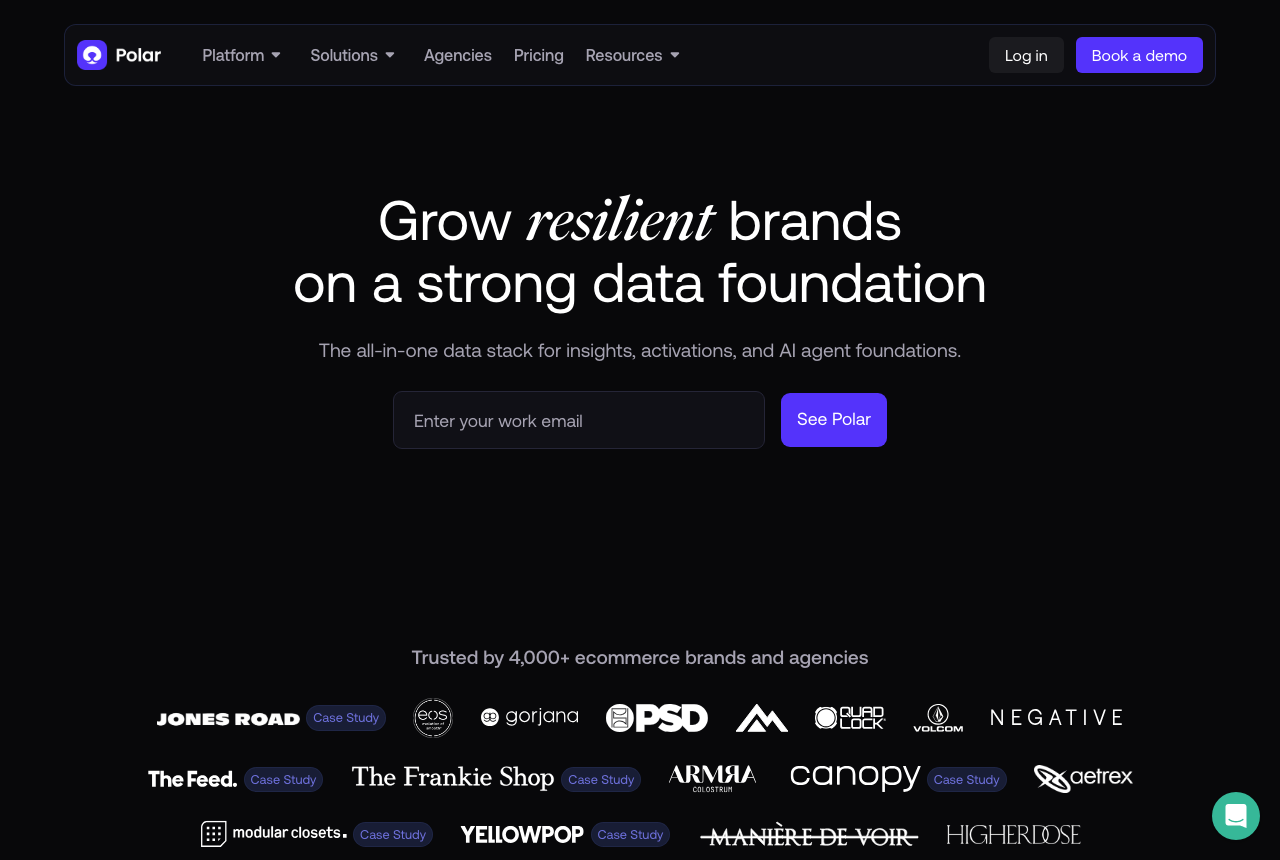
Polar Analytics is the data-literate operator's tool. A first-party pixel fed server-side, plus a set of connectors, pulls Shopify, Meta, Google, Klaviyo and the rest into one place, and instead of a fixed screen it hands you a canvas to build custom reports on blended profit, MER and marketing across every channel. It is honest that its attribution is directional rather than exact, which is the right way to read any of these tools, and it needs a warm-up period before the numbers settle. It is rated 4.9 out of 5 across 117 Shopify App Store ratings, with setup and data centralization the most-praised parts. For a brand doing real GMV with someone to build and read the dashboards, it answers the question that matters: which channels actually made money. The full Polar Analytics review covers where that flexibility pays off and where the bill catches up with it.
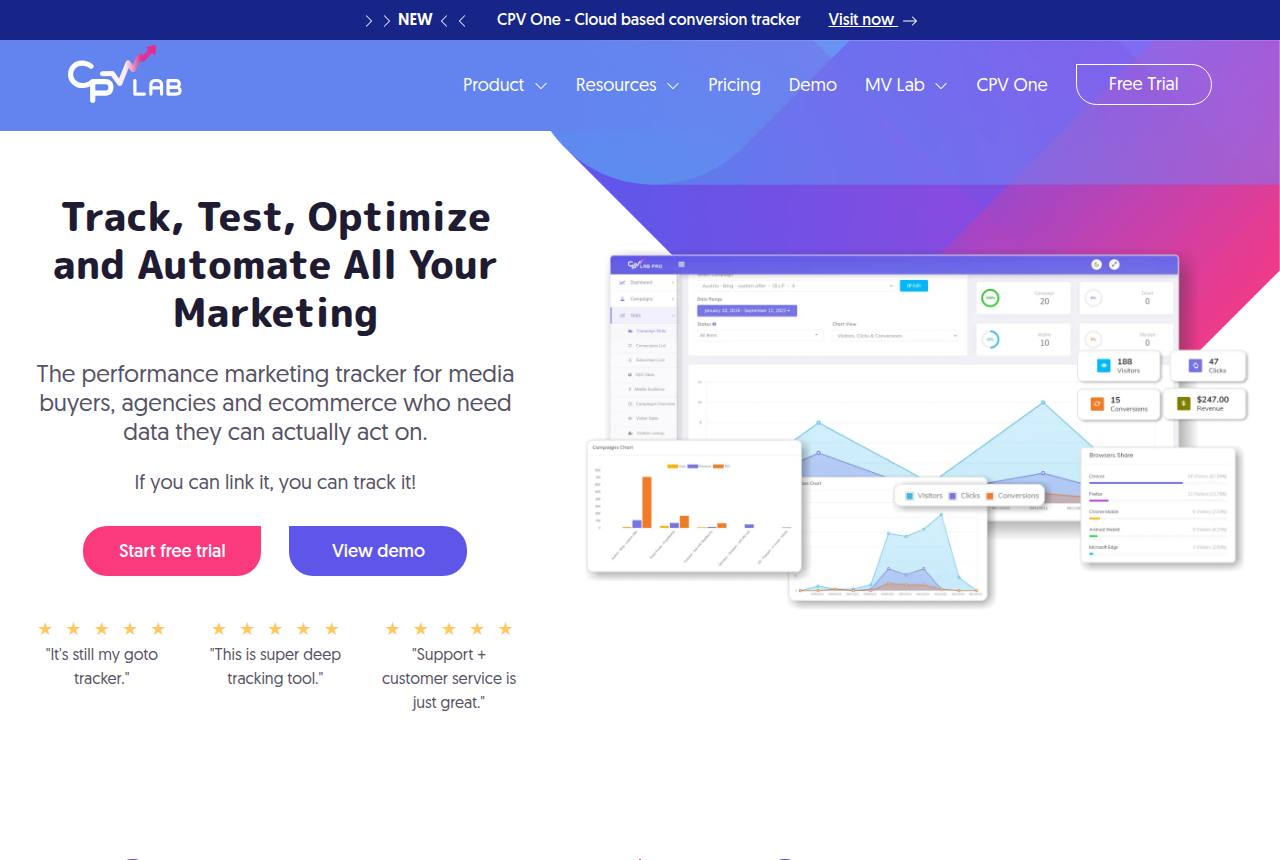
CPV Lab Pro comes at the problem from the campaign side, and it comes at it from a server you own. It is one of the longer-running trackers in the category, run by media buyers for about a decade, and its whole design is built around owning your data. It captures clicks and conversions with cookieless server-to-server postbacks that keep firing on iOS and in privacy browsers, records thirty-plus data points per click, filters bots and proxies, and runs A/B and multivariate tests on landers and offers from inside the tracker. There are no click limits and no overage fees on any plan, so you can pour traffic at a winning campaign without watching a meter. The CPV Lab Pro review covers how that holds up and where the deployment bites.
Who each one is really for
Polar suits a Shopify or DTC brand doing real revenue that has outgrown a fixed dashboard and wants to build its own reporting across orders, ad spend and email. It speaks the language of blended MER and contribution margin, and it earns its keep when there is enough spend that a two-percent error in attribution is real money, and enough of a team that a build-your-own layer actually gets used. When the storefront is on Shopify, the budget runs across several channels, and there is a data-literate operator to own it, Polar is built for that shape.
CPV Lab Pro suits the hands-on media buyer: an affiliate, a lead-gen operator or a DTC buyer running campaigns across Meta, Google, native or push, who needs to see which source, campaign and offer converted, and who would rather own the tracking data than rent it. It tracks offers on any domain, not just one store, and it does not assume a data team or a five-figure contract to get going. The one thing it does assume is that you can run a server, and that assumption is the whole trade, which the pricing and the catch sections below get into. For most people who put both of these on a shortlist and buy media for a living, it is the closer fit, with that one condition attached.
The dividing line is measure versus track
The single distinction that should decide this is what each tool does with a conversion. Polar records it, then blends it with your spend and costs across every channel to tell you which part of the whole store was actually profitable. CPV Lab Pro records it at the click level and attributes it to the source, campaign, lander and offer, and on its Pro plan it syncs the ad cost back in and fires conversions to the ad platforms through their conversion APIs so they can optimize on real sales. One is built to help you read a store's profit; the other is built to track paid campaigns and feed the algorithm. They are answers to two different questions that happen to share a search box.
There is a real gap on each side. CPV Lab Pro does not roll organic, email and every other channel into one blended-profit screen the way Polar does, so it will not by itself tell you the whole store's MER. Polar does answer that, but it is a reporting layer over a store you host elsewhere, and it is not a click-level tracker you point at landers and offers on domains you do not own. If tracking paid campaigns across the open web is the point, the best ad tracker ranking places CPV Lab Pro against the incumbents; if reading store-wide profit is the point, the best attribution software ranking places Polar against the heavier platforms a brand graduates to, and Triple Whale vs Polar Analytics covers the choice between a prebuilt profit dashboard and a build-your-own one.
Where the money actually goes
The two do not count the same unit, so the entry prices do not compare directly. Polar's Core plan opens at $750 a month billed on your store's GMV, so the bill climbs with revenue and a smaller store overpays. There is no free tier, and a dedicated success manager only arrives at a $10,000 annual contract, so below that some reviewers flag slower support and connector delays. It is priced for a brand doing real revenue, because that is who it is for.
CPV Lab Pro is a flat monthly fee, and it never meters your clicks. Starter is $57 a month and Pro is $97, with one-time lifetime licences if you would rather own the software outright than subscribe. The one caveat that matters when you compare the two: the features most modern paid-media buyers come for, automatic ad-cost sync and CAPI, start on the $97 Pro plan, not the $57 Starter, so treat $97 as the real entry price for that setup. On top of the licence you pay for and maintain the server it runs on, which is a separate bill and the subject of the next section.
The catch on each
Polar's catch is the bill and what it assumes about your team. The GMV-linked price means a smaller store pays more than the data is worth, and buyers report it tightens up once your attribution needs get genuinely deep, where Triple Whale goes wider on ecommerce metrics and Northbeam goes deeper on modeling. The build-your-own dashboards are also only as useful as the person building them, so budget for someone to own the setup before you trust a number to the penny. Voluum vs Polar Analytics covers the same measure-versus-track fork against a managed cloud tracker if that is closer to your real question.
CPV Lab Pro's catch is the deployment, and it is a real one. It runs on your own Linux VPS, with PHP, MySQL or MariaDB and ionCube to keep patched, fast and online, so the cheap unlimited tracking is only ever as reliable as the machine under it. Reviewers who like the tool still say the number of campaign types and settings can overwhelm a beginner, so budget setup time. Its outside proof is also thin: Trustpilot sits at 3.8 from only sixteen reviews, with most public praise on affiliate forums rather than the large review sites. If running a server is not something you want to own, the honest answer is that a managed tracker fits you better than CPV Lab Pro here: the vendor's own cloud version, CPV One, removes the hosting, and a hosted tracker like RedTrack does the same job without a VPS. The upside of the self-hosted route is that the check is cheap to run: the 14-day trial takes no card and the vendor helps with the initial install, so prove it on one real campaign on your own server before you commit. Binom vs CPV Lab Pro covers the choice if another self-hosted tracker is the other tool you are weighing.
Which one for you
Three quick reads:
- Data-literate Shopify or DTC brand doing real GMV: Polar Analytics. Build-your-own profit and marketing dashboards across every channel, worth the GMV-linked bill once your revenue and your team justify it.
- Hands-on buyer who can run a server and wants to own the data: CPV Lab Pro. Unlimited events with no per-event bill, cost sync and CAPI on the Pro plan, and the pick for most people down to these two once you accept the hosting and test on one real campaign first.
- Buyer who wants click tracking without running a server: look at a managed tracker instead, either CPV Lab Pro's own cloud sibling or a hosted tool like RedTrack, before you commit to self-hosting.
For the wider field, the best ad tracker ranking and every head-to-head place both against the tools a scaled buyer reaches for next. If a prebuilt profit dashboard is the direction rather than a build-your-own one, Triple Whale vs Polar Analytics covers that fork on the measure side.
Polar Analytics
What works
- Pulls Shopify, ad platform and email or SMS data into custom dashboards you build yourself, not a fixed template, with unlimited users and historical data on the Core plan
- First-party pixel and server-side tracking, so the numbers survive the browser better than a pixel-only setup
- Rated 4.9 out of 5 across 117 Shopify App Store ratings, with setup and data centralization the most-praised parts
What to watch
- Core opens at $750 a month and is priced on your GMV, so the bill climbs with revenue and a small store overpays
- Buyers report it gets restrictive when you need deep or custom attribution, where Triple Whale goes wider on ecommerce metrics and Northbeam goes deeper on modeling
- A dedicated success manager only arrives at a $10,000 annual contract, and some reviewers below that flag slow support and connector delays
CPV Lab Pro
What works
- Unlimited events, no click limits, no overage fees, on every plan. You can pour traffic at a winning campaign without watching a meter, which is the opposite of the event-metered pricing at Voluum and RedTrack where the bill climbs with volume.
- You own the data. It is self-hosted on your own Linux server, so your click logs and campaign data sit on hardware you control rather than a vendor's cloud. For many long-term affiliates that is the whole reason they run it.
- A full tracker, not a lite tool. Cookieless server-to-server postback tracking that keeps firing on iOS and in privacy browsers, 30-plus data points per click, bot and proxy filtering, A/B testing of landers and offers from inside the tracker, and multivariate testing on the top plan.
- Support is the part users praise most. Across the affiliate forum afflift and Trustpilot the repeated note is fast, knowledgeable help that walks you through postback and CAPI setup by name, and the vendor helps with the initial install at no cost.
- Predictable cost, and a lifetime option. Starter is $57/mo and Pro $97/mo, and one-time lifetime licences let you own the software outright instead of subscribing. No per-event bill to model.
What to watch
- Self-hosting is the real cost and the real risk. It runs on your own Linux VPS (PHP 8.1 to 8.4, MySQL or MariaDB, ionCube), a separate bill and your job to keep fast, patched and online. The cheap unlimited tracking is only as good as the machine under it. If server administration is not your thing, the cloud sibling CPV One or a managed tracker like RedTrack fits better.
- Expect a learning curve. Reviewers who like the tool still say the number of campaign types, settings and reports can overwhelm a beginner, so budget setup time.
- The features you probably came for start on Pro. CAPI, automatic ad-spend cost sync and API access are not on the $57 Starter plan, so the real entry price for a modern paid-media setup is $97/mo.
- Thin independent proof. Trustpilot sits at 3.8 from only 16 reviews, and most public praise lives on affiliate forums rather than the large review sites, a smaller footprint than Voluum or RedTrack. The 14-day trial is the due diligence the review count cannot give you.
- Overkill for a content-site affiliate. If all you need is which blog link got clicked, a link cloaker or your network's sub-ID report is simpler. This is far more tracker than that job wants.
Pricing
Polar Analytics: from $750/mo, priced on GMV. Pricing is tiered by annual online GMV and quoted after a demo; the vendor's pricing page publishes no dollar figure. The Core Plan bundles Business Intelligence, Klaviyo Audiences, Advertising Signals and Polar MCP and is stated to save 20% versus buying products individually; a Custom Plan lets you pick products a la carte. Every plan includes a dedicated Snowflake database, the ecommerce semantic layer, a first-party pixel, unlimited users and unlimited historical data, and a dedicated success manager.
CPV Lab Pro: from $57/mo, self-hosted. Four tiers, and every one includes unlimited campaigns and unlimited events, with no click limits and no overage fees. Starter is $57/mo month to month, or $48/mo billed annually ($577 a year). Pro is $97/mo, or $81/mo annually ($977). Expert is $187/mo, or $156/mo annually ($1,877). Agency is custom, quoted on a call. Lifetime licences are a one-time payment instead of a subscription: $1,157 Starter, $1,957 Pro, $3,757 Expert, and they cover CPV Lab v13 for life, not future major versions. CAPI, automatic ad-spend cost sync and API access begin on the Pro plan, not Starter. It is self-hosted, so a Linux VPS is a separate cost you pay your host. The trial runs 14 days with no card up front, backed by a 30-day money-back guarantee.
Pricing verified against each vendor on 2026-09-23. Check before you buy.
Our pick
CPV Lab Pro
CPV Lab Pro is real, and it is one of the longer-running trackers in the category: a self-hosted performance marketing tracker media buyers have run for a decade. If you buy paid traffic, want unlimited events with no click limits or overage fees, and are comfortable running your own server, you are unlikely to regret it. The catch is the deployment. You supply and maintain a VPS, the features you probably came for (CAPI and automatic cost sync) start on the $97 Pro plan, and its independent review footprint is thin, so lean on the 14-day trial to prove it on one real campaign before you commit.
Frequently asked questions
Polar Analytics or CPV Lab Pro: which should I use?
Which is cheaper, Polar Analytics or CPV Lab Pro?
Do Polar Analytics and CPV Lab Pro do the same thing?
Can CPV Lab Pro measure my whole store's blended profit?
Do I really have to run my own server for CPV Lab Pro?
Would running both make sense?
Sources
Other sources
6 discussions and reviews read for this page. Quotes are excerpts; open a link to read the original in context.
- [afflift-danap] CPV Lab Pro - Ratings | affLIFT
- [afflift-lazyguy] CPV Lab Pro - Ratings | affLIFT
- [afflift-huiye] CPV Lab Pro - Ratings | affLIFT
- [trustpilot-alan] CPV Lab Pro Reviews | Trustpilot
- [trustpilot-ralfs] CPV Lab Pro Reviews | Trustpilot
- [trustpilot-reply] CPV Lab Pro Reviews | Trustpilot

Written by
Dana Rourke
Lead reviewer
Dana Rourke is the lead reviewer at Campaign Buyer. She owns the tracker and attribution coverage: reading what long-term users report about each tool, checking its documentation and pricing, and verifying prices with the vendor before writing the verdict. Keeping the rankings honest mostly means writing down what the top pick gets wrong, so she does that first.
Last checked 2026-09-23