Voluum vs Polar Analytics
By Dana Rourke, Lead reviewer. Reviewed by Campaign Buyer Editorial. Updated 23 September 2026.
Quick answer
Pick Voluum if you buy affiliate or native traffic at volume and want a proven, managed cloud tracker that tells you which click, source and offer converted across offers on any domain; pick Polar Analytics if you run a Shopify or DTC store doing real revenue and want to build your own profit and marketing dashboards on first-party data.
Side by side
| Voluum | Polar Analytics | |
|---|---|---|
| What it is | Managed cloud click tracker | Shopify BI you build yourself |
| What it measures | Which click and offer converted | One store's blended profit |
| Best-fit user | Affiliate and native buyers | Data-literate Shopify brands |
| How you read data | Campaign tables and reports | Custom dashboards you build |
| Tracks across | Offers on any domain | One Shopify store |
| Pricing model | Event-metered, from $119/mo | GMV-scaled, from $750/mo |
| Setup effort | Wire postbacks, self-serve | Connect Shopify and channels |
If you are weighing Voluum against Polar Analytics, the first thing to say is that they are not two versions of one tool. Both touch your ad spend, so they surface in the same searches, but they answer different questions and they are built for different people. Working out which question is yours settles the choice faster than any feature list will.
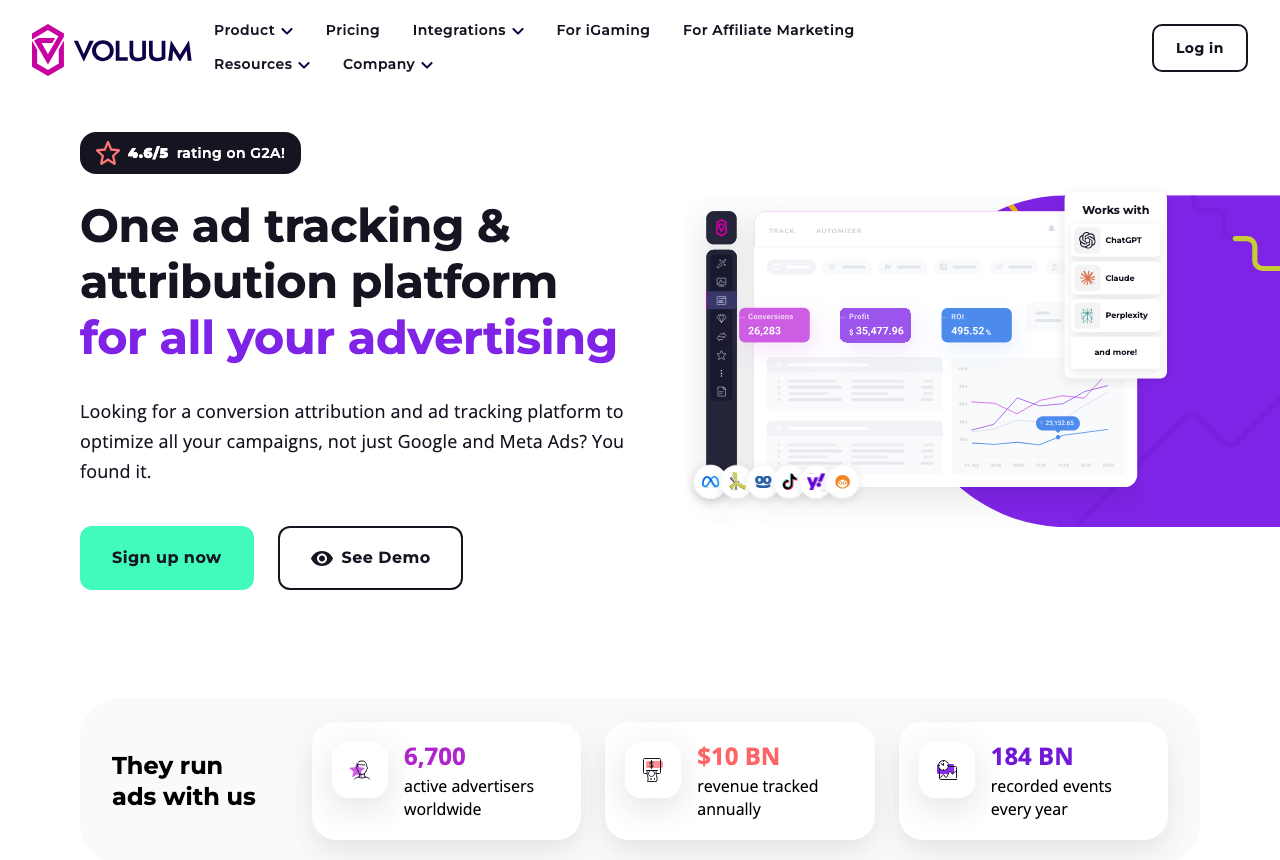
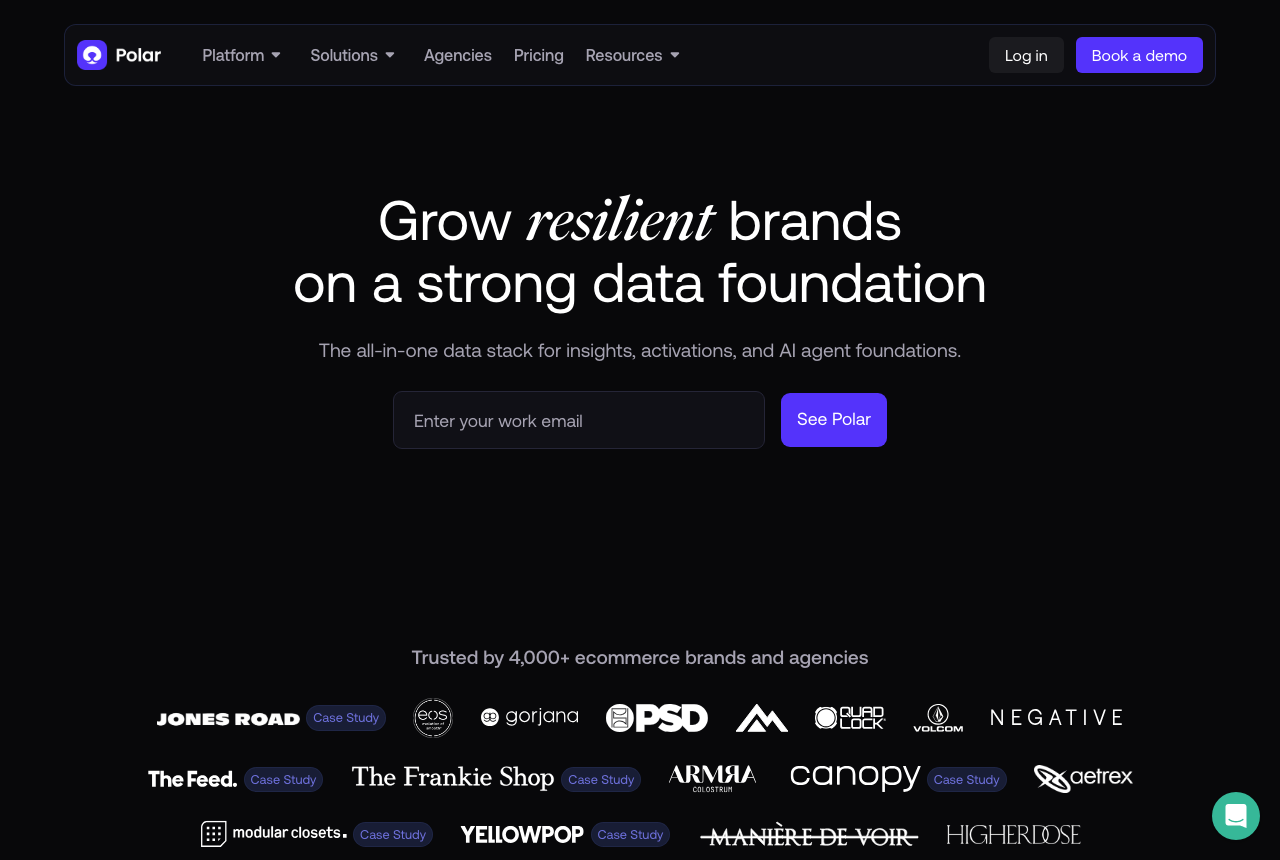
Voluum is a managed cloud click tracker. It stamps every click, catches the conversion server-side, fires postbacks to your networks, and tells an affiliate or native buyer which source, campaign and offer actually made money, across offers that live on any domain. Polar Analytics is a business-intelligence layer for a Shopify or DTC store. It pulls Shopify, the ad platforms and email into one place and lets a data-literate operator build custom dashboards on first-party data. One follows clicks across the open web. The other measures the profit of one store you run on Shopify.
The question that decides it
Answer this before you compare a single feature. Are you buying traffic to offers, or running a store? A Meta, native or push buyer sending clicks to landers and offers across many domains needs to know which click converted, at redirect speeds that hold up at volume. That is Voluum's whole job. A founder or operator running a Shopify store doing real revenue needs to see blended profit and marketing performance for that one business, sliced their own way. That is Polar's. If those two sentences describe different people, and they do, then you already know which of the two you are, and the tool follows from that.
The mistake to avoid is choosing on price or brand and then finding the tool measures the wrong thing. Voluum will not hand a Shopify brand a blended-profit dashboard, and Polar will not track a media buyer's clicks across offers on other people's domains. Neither of those is a flaw. They were built for different work.
Voluum: the proven cloud tracker for paid traffic
Voluum is the tracker most affiliates learned on, and that history is its real advantage. For Meta and native campaigns it is the default answer in nearly every thread, which means every traffic source, offer type and integration you might need has already been documented by someone before you. When a setup breaks at two in the morning, that depth of public knowledge is worth more than any feature checkbox.
It is cloud-hosted, so there is nothing to install or patch, and its redirect and reporting infrastructure is fast and reliable at volume, with anti-fraud and traffic-distribution rules built in rather than bolted on. If your income depends on the tracker never being the bottleneck, that reliability is what you are paying for.
The cost is money, and it is not small. Voluum is the most expensive mainstream tracker: $119 a month billed annually for 1 million events, climbing to $299 for 5 million, with overages charged on top, so the bill grows with your traffic and is hard to predict as you scale. And like every tracker, it answers a narrower question than Polar: it tells you which click, source and offer converted, but it does not pull Shopify orders, ad spend and email into a blended-profit dashboard. For a buyer scaling offers on paid traffic that is not a flaw, it is simply the ceiling of what a click tracker is built to do. If your funnels are simple, you are paying for polish a cheaper tracker like RedTrack would match.
Polar Analytics: the BI layer for a Shopify store
Polar is the attribution and reporting tool for a Shopify brand that has outgrown a fixed dashboard and wants to build its own. It centralizes Shopify, Meta, Google, Klaviyo and the rest into one place, then lets a data-literate operator assemble custom reports rather than read a prebuilt template. Its attribution runs off a first-party pixel fed server-side, and Polar is upfront that the numbers are directional rather than exact, which is the honest way to read any of these tools. For a store doing real GMV with someone who will build on it, that flexibility is the draw, and the Shopify App Store rating backs it up at 4.9 across 117 ratings, with setup and data centralization the parts buyers praise most.
The honest cost is money and depth. Core opens at $750 a month and is priced on your GMV, which is why buyers on Reddit call revenue-linked pricing a tax and why a smaller store overpays for it. And the recurring critique is that it is strong for visual reporting but gets restrictive once you need deep or custom attribution, where a purpose-built tool does more. Support is praised overall, but a dedicated success manager only arrives on a $10,000 annual contract, and reviewers below that report slow responses on connector problems. One more thing to be clear about: Polar assumes Shopify, so it is not built to follow a media buyer's traffic across offers on domains you do not own.
The price gap is not a discount, it is a different product
The sticker difference is large and it means something. Voluum meters events from $119 a month billed annually; Polar opens at $750 priced on your GMV. That is not one tool sold cheap and dear. Voluum's metered price buys click tracking on managed infrastructure, and it climbs with the events your traffic generates. Polar's GMV-scaled price buys a managed BI layer for a store, and it climbs as that store grows. There is no crossover where one becomes the other, because they do different jobs.
Read both numbers on your real situation, not the entry line. Check Voluum's events against your real monthly volume, because impression-heavy native traffic climbs its metered plan faster than the $119 headline suggests, and Polar's bill for a mid-market brand runs well into five figures a year. If either number feels absurd for your case, that is the signal that the tool was not built for you.
A third path if you build and host the offer yourself
There is a third answer worth naming, because neither of these tools builds the pages or the checkout whose numbers they read. Voluum follows clicks to landers and offers hosted elsewhere; Polar reads a Shopify store's data. ElasticFunnels owns that middle instead. It is a funnel platform for teams running paid traffic that builds the pages, split-tests variants under one campaign URL so the ad platform keeps its learning, and hosts the checkout, and it keeps its ad-spend and conversion reporting on the same data layer as the pages and the sale. Because a sale closes in a checkout it hosts, that conversion is a first-party event it records directly. For affiliate work it fires server-side postbacks to your networks on purchase, refund, chargeback and renewal straight from that checkout, which is the postback job you would otherwise wire into Voluum. ElasticFunnels plans open at $97 a month, plus 0.5% of revenue processed through its hosted checkout, and it starts with a 14-day free trial that takes no card, worth noting next to Voluum's annual billing.
Two honest limits keep it on its own line rather than in the head-to-head. It is newer than either tool here, and there is very little independent third-party review coverage to check its claims against, so until you run real volume through it you are largely taking the vendor's word for how its attribution and postbacks hold up. Both tools on this page have years of public setups and threads to check against. And its reporting covers the funnels it hosts, so a high-volume affiliate tracking clicks across offers on other people's domains still needs a dedicated tracker like Voluum for that part, and a brand that wants a blended-profit view of a store it runs on Shopify still needs a store analytics tool like Polar. ElasticFunnels is the option for the seller who runs their own offer end to end, not a replacement for either tool here.
Which one for you
You buy affiliate or native traffic at volume and want a proven, hands-off tracker: Voluum. The most-documented ecosystem in the category, fast redirects at volume, and standard anti-fraud are the right call, as long as you can absorb event-based pricing that grows with your traffic. If your funnels are simple, a cheaper tracker like RedTrack does the same core job for less.
You run a Shopify or DTC store and want to build your own profit dashboards: Polar Analytics. Centralized data across Shopify, the ad platforms and email, custom reports and unlimited users are worth the $750 entry once a team actually builds on them, provided your revenue justifies the GMV-scaled bill and you accept that the attribution is directional.
You build and host your own offer end to end: look at ElasticFunnels alongside them, with the newness caveat above in mind, and keep a dedicated tracker for any traffic that closes off your own domains.
Voluum takes our default pick here, not because it out-measures Polar for a Shopify brand, but because more readers who reach this comparison are the paid-traffic buyer Voluum serves than the Shopify operator Polar requires. That is a statement about who is reading this site, not about which product is better built. On Polar's own turf, a store doing real GMV that wants to own its reporting, Polar is plainly the better fit, and we rank it third for ecommerce attribution for exactly that reason. If flat, self-hosted pricing is your draw instead, our Voluum vs Binom page weighs a self-hosted tracker against Voluum, and our Binom vs Polar Analytics page runs this same tracker-against-store-BI question with that tracker.
Voluum
What works
- The default recommendation for Meta and native affiliate traffic, so setups and integrations are well documented
- Fast redirect and reporting infrastructure that holds up at volume
- Anti-fraud and traffic-distribution rules come standard
What to watch
- The most expensive mainstream tracker: $119/mo billed annually to start, $299 to reach 5M events
- Event overages are billed on top, so costs are hard to predict as traffic grows
- You pay for polish you may not need if your funnels are simple
Polar Analytics
What works
- Pulls Shopify, ad platform and email or SMS data into custom dashboards you build yourself, not a fixed template, with unlimited users and historical data on the Core plan
- First-party pixel and server-side tracking, so the numbers survive the browser better than a pixel-only setup
- Rated 4.9 out of 5 across 117 Shopify App Store ratings, with setup and data centralization the most-praised parts
What to watch
- Core opens at $750 a month and is priced on your GMV, so the bill climbs with revenue and a small store overpays
- Buyers report it gets restrictive when you need deep or custom attribution, where Triple Whale goes wider on ecommerce metrics and Northbeam goes deeper on modeling
- A dedicated success manager only arrives at a $10,000 annual contract, and some reviewers below that flag slow support and connector delays
Pricing
Voluum: from $119/mo billed annually. Profit entry plan is $119/mo on annual billing (1M-event tier); Scale is $299/mo, also annual (5M-event tier). The pricing page's monthly toggle does not expose a month-to-month figure. Overage on Profit is $0.06 per 1,000 events.
Polar Analytics: from $750/mo, priced on GMV. Pricing is tiered by annual online GMV and quoted after a demo; the vendor's pricing page publishes no dollar figure. The Core Plan bundles Business Intelligence, Klaviyo Audiences, Advertising Signals and Polar MCP and is stated to save 20% versus buying products individually; a Custom Plan lets you pick products a la carte. Every plan includes a dedicated Snowflake database, the ecommerce semantic layer, a first-party pixel, unlimited users and unlimited historical data, and a dedicated success manager.
Pricing verified against each vendor on 2026-09-14. Check before you buy.
Our pick
Voluum
Voluum is the pick if you run affiliate or native campaigns and want the proven, low-friction tracker other buyers already use, provided you can absorb the price.
Frequently asked questions
Voluum or Polar Analytics: which should I use?
Which is cheaper, Voluum or Polar Analytics?
Do Voluum and Polar Analytics do the same thing?
Can Polar Analytics replace a click tracker for a media buyer?
Is Voluum worth it for a Shopify store?
Sources
Other sources
2 discussions and reviews read for this page. Quotes are excerpts; open a link to read the original in context.

Written by
Dana Rourke
Lead reviewer
Dana Rourke is the lead reviewer at Campaign Buyer. She owns the tracker and attribution coverage: reading what long-term users report about each tool, checking its documentation and pricing, and verifying prices with the vendor before writing the verdict. Keeping the rankings honest mostly means writing down what the top pick gets wrong, so she does that first.
Last checked 2026-09-23