Find the stack for your offer
The ad bill, the tracker bill and the page tool are three different purchases. Five questions show which ones to buy, and which guide to read next.
By Dana Rourke, Lead Reviewer, with review from Campaign Buyer Editorial, updated 21 October 2026. We revisit this page every 90 days.
My take
I'd start where the money is captured. If a network takes the payment, I'd buy the click tracker and skip a cart. If the product is yours and the bump sits on your checkout, I'd buy the page and the checkout as one platform, and I'd keep measurement on a light plan until the fee is a small share of one winning campaign. I'd skip attribution software until a store is spending across channels and the last click no longer matches profit. Answer the five questions below to see that split for your own offer.
Answer five questions
Choose one answer in each group, then press the button labeled Show the categories. The worked examples use the same rules, so you can read the categories with the script off.
How the categories are chosen
A media-buying stack is three separate purchases. Measurement records the click and the conversion that follows it. The page is what the visitor reads before they pay. Checkout is where the money is taken, on your side or on a network.
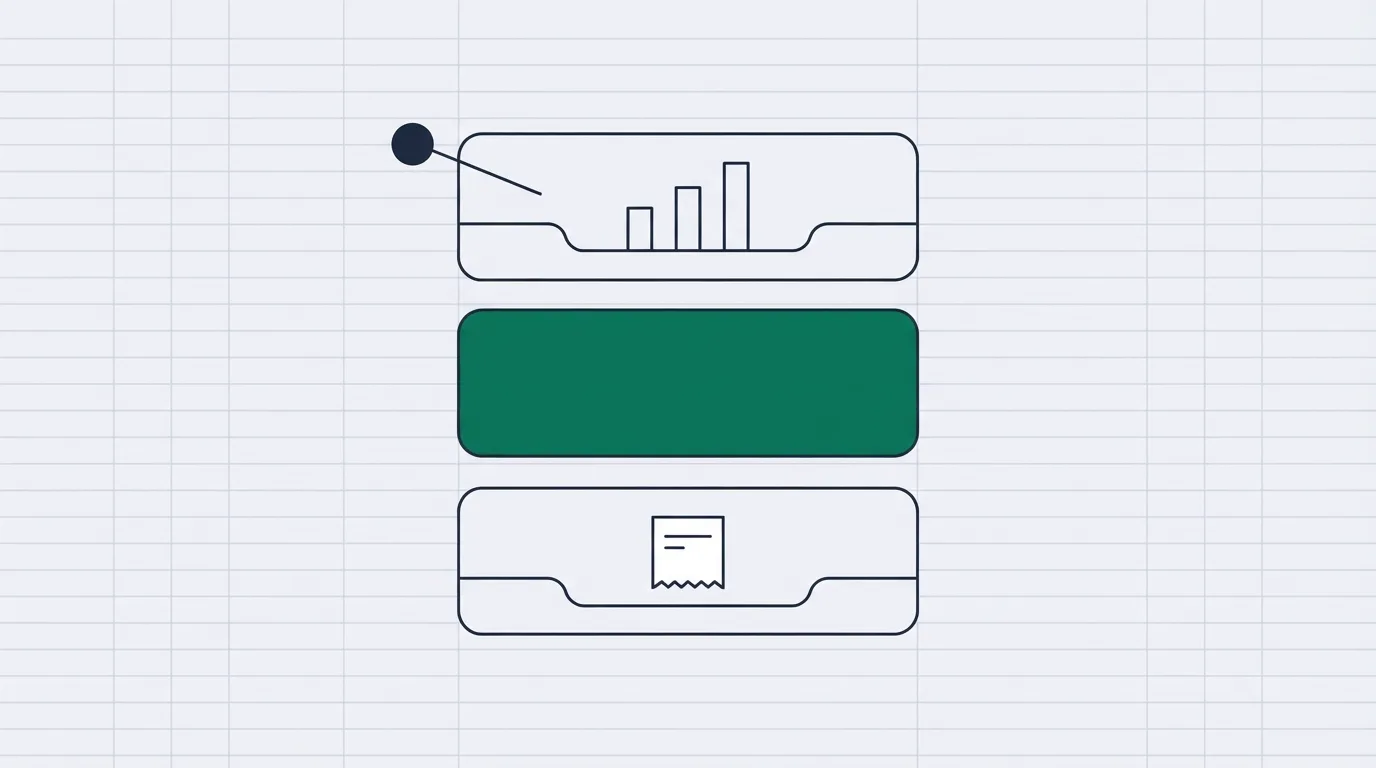
There is no single vendor template for a media buying tool stack. The tree is this desk's reading of the scenario guides, mapped onto the categories this site already covers. BeMob's scenario guide opens with three questions: whether the traffic source allows a redirect URL, where the conversion happens, and how many conversions one client can generate.
Voluum's redirect method sends the visitor through Voluum on the ad click, records the visit and the tokens, then routes them to a lander or an offer. The same article says that method may not comply with some traffic sources, and it names Meta Ads. On a multi-step path, the button on the landing page can pass through Voluum again before the offer.
When the ad platform wants the final URL on a domain you control, BeMob's direct-tracking scenario uses a pixel on that page. The guide cites Facebook, Google Ads and Bing. That setup is separate from how the conversion is delivered back to the ad platform. Server-side tracking vs pixel covers delivery. The tool that stamps the click is still its own purchase.
Volume changes the bill, while the category stays the same. Hosted trackers meter events. A self-hosted license is one flat fee, and you run the server yourself. No single event volume makes one pricing model the cheaper choice for every vendor. The ad tracker cost calculator applies published plan prices to a volume you enter. Cloud vs self-hosted tracker covers the work of running the server. The methodology page explains how this desk reads those sources.
Affiliate pre-lander on Meta
Take an example buyer. The traffic is Meta. The offer belongs to an affiliate network. An advertorial sits in front of it. In this example, volume is about 400,000 events a month, in the range from 100,000 to 1 million. Payment happens only on the network.
The measurement category is a standalone click tracker with a landing-page pixel, because a redirect is a poor fit for that ad URL. The second hop, from the advertorial into the offer, is the transition Voluum records when that button fires. For the advertorial, buy a page builder. BeMob's pre-lander scenario is the advertorial, the quiz or the product page before the network offer, with the tracker click URL on each button. Checkout stays on the network, so a cart of your own is the wrong purchase.
Read funnel builder vs page builder for the page choice, and how postback URL tracking works for the conversion the network sends back.
Your own offer with bumps
A second example runs Meta or Google to a course on the buyer's own domain. The path is a sales page, then a checkout with an order bump and a one-click upsell. Events sit under 100,000 a month.
Measurement is a campaign tracker that can place the click ID on that domain and read the sale back. BeMob treats an owned site, a signup or a lead form as its own scenario: the ID returns on a server postback or a thank-you pixel. At this event count, start on a light plan. Pages and payment lean toward a funnel platform, or a page builder plus a checkout that can show the bump and the upsell. SamCart's homepage describes that second shape as sales pages, checkout, order bumps, upsells and subscription billing in one platform.
Before the ad budget grows, run the offer through the break-even ROAS and CPA calculator. Buyers who start on a free tracker later look for automatic ad-cost import. That is a second subscription you notice once several tools are billing. I'd judge that import by the margin on one winning campaign before adding it.
A funnel platform for the page and the charge
ElasticFunnels is a funnel platform for teams that run paid traffic. It builds the pages, tests variants under one campaign URL, and hosts the checkout, including order bumps, one-click upsells and subscriptions. The click, the order and the refund sit on one record. For the course above, that is one way to cover the page and the payment step together. Teams also weigh it against ClickFunnels for the funnel, against SamCart for the checkout, and against Unbounce when the only job is the page. Unbounce's landing-page product hosts the page and A/B tests. Checkout stays outside that builder.
ElasticFunnels is newer than those platforms, and there is very little independent review coverage to check its claims against. The company has been building it since 2023, so that public record is short. Until you run your own traffic, the reporting claims rest on what the vendor publishes. The trial is 14 days and does not require a card. The picker returns the category. Brand comparisons stay on the ElasticFunnels review.
A Shopify catalog with rising spend
A third example has a Shopify catalog, the store's own checkout, paid traffic on more than one channel, and more than a million events in a month. The buyer wants profit across channels, beyond the last click.
The picker leads with an ecommerce attribution platform, then a builder that publishes on the store, then Shopify checkout. A click log can still sit beside that for a campaign that pays on a postback. It is the second tool once you are deciding where the store's budget goes. Northbeam presents multi-touch attribution as ad performance measured outside the ad platform's report, using first-party data. The ecommerce attribution roundup is where those tools are compared.
Unbounce markets a custom landing page for paid campaigns in front of the product grid. Page builders that publish on a shop you already run are covered in the Shopify page builders roundup and the WordPress page builders roundup.
Affiliate vs ecommerce tracking stacks
The fork is where the sale closes. An affiliate offer needs the click ID to reach the network and return in a postback. BeMob's direct-to-offer scenario is that path when there is no pre-landing page. A store can live on its pixel until credit has to move across channels. Click tracker vs attribution platform draws the line: the tracker tells you which click converted and can feed the platforms' conversion APIs, and the attribution platform is what you open when you move budget across channels.
Affiliate offer
The job is finding which click earned the network's postback. A click that goes straight to the offer needs no page tool. An advertorial needs a builder. Payment stays on the network.
Store catalog
The job is deciding which channels deserve the next dollar. The page should publish on the shop. Payment stays on the store checkout. Attribution software is the add-on once last-click no longer matches profit.
A platform built to run an affiliate program, with partner commissions and payouts, is a different product from the log a media buyer uses. If you buy the ads, you want the campaign tracker. The affiliate tracking software review explains the difference, and what goes wrong when a media buyer buys the program platform.
Which ad tracker do I need?
Skip a paid tracker while you are not buying traffic. The methodology page, linked above, is the right read until an ad click needs an ID.
Most people start on a free monthly allowance. BeMob's pricing page includes 100,000 events on the free plan. People testing a first offer say a simpler tracker is enough at that stage. They say the heavier hosted trackers cost more than early spend can carry. I'd stay on the free plan, use the cost calculator linked above, and upgrade when the fee is a small share of one winning campaign. The guide on simple affiliate tracking covers that early stage.
A metered cloud plan fits when you want the vendor to host the log and your events sit inside a published allowance. Self-hosting is worth the server work when push, pop or a very high event count would make overage the bulk of the invoice. The cloud versus self-hosted comparison above is the full version of that choice. There is still no universal event count where the flat license wins.
An attribution platform is how a store assigns budget once a sale has to be credited across channels. It leaves the click log in place for affiliate postbacks. RedTrack's help page lists API connections for Meta, Google, TikTok, Taboola and Outbrain. That is a tracker built to work with both the strict ad platforms and native sources. Compare the ad trackers.
Frequently asked questions
Do I need a tracker if the whole business is a Shopify store?
When is an attribution platform more than a small account needs?
Can one funnel subscription cover measurement, the page and payment?
Will the picker choose RedTrack or Voluum?
Does native traffic use the same stack as Meta?
Is server-side tracking enough on its own?
Changelog
- 21 October 2026. First published. Five questions return measurement, page and checkout categories from vendor scenario guides.
Sources
- Voluum, track with a redirect method
- BeMob, choose your tracking scenario
- BeMob pricing, free plan event allowance
- Northbeam, multi-touch attribution
- Unbounce homepage, landing pages for paid campaigns
- Unbounce, landing pages product
- SamCart homepage, pages and checkout in one platform
- RedTrack, traffic source integration status
- r/Affiliatemarketing thread on click trackers
- r/Affiliatemarketing thread on a first tracker
- AffiliateFix thread on tracker cost import

Written by
Dana Rourke
Lead Reviewer
Dana Rourke is the lead reviewer at Campaign Buyer. She covers trackers and attribution on this site: she reads what long-term users report about each tool, checks its documentation and pricing, and verifies prices with the vendor before writing the verdict. Keeping the rankings honest mostly means writing down what the top pick gets wrong, so she does that first.
Last checked 2026-10-21
Comments
No comments yet. Questions and your own experience are welcome.
Thank you. Your comment will appear once it has been reviewed.