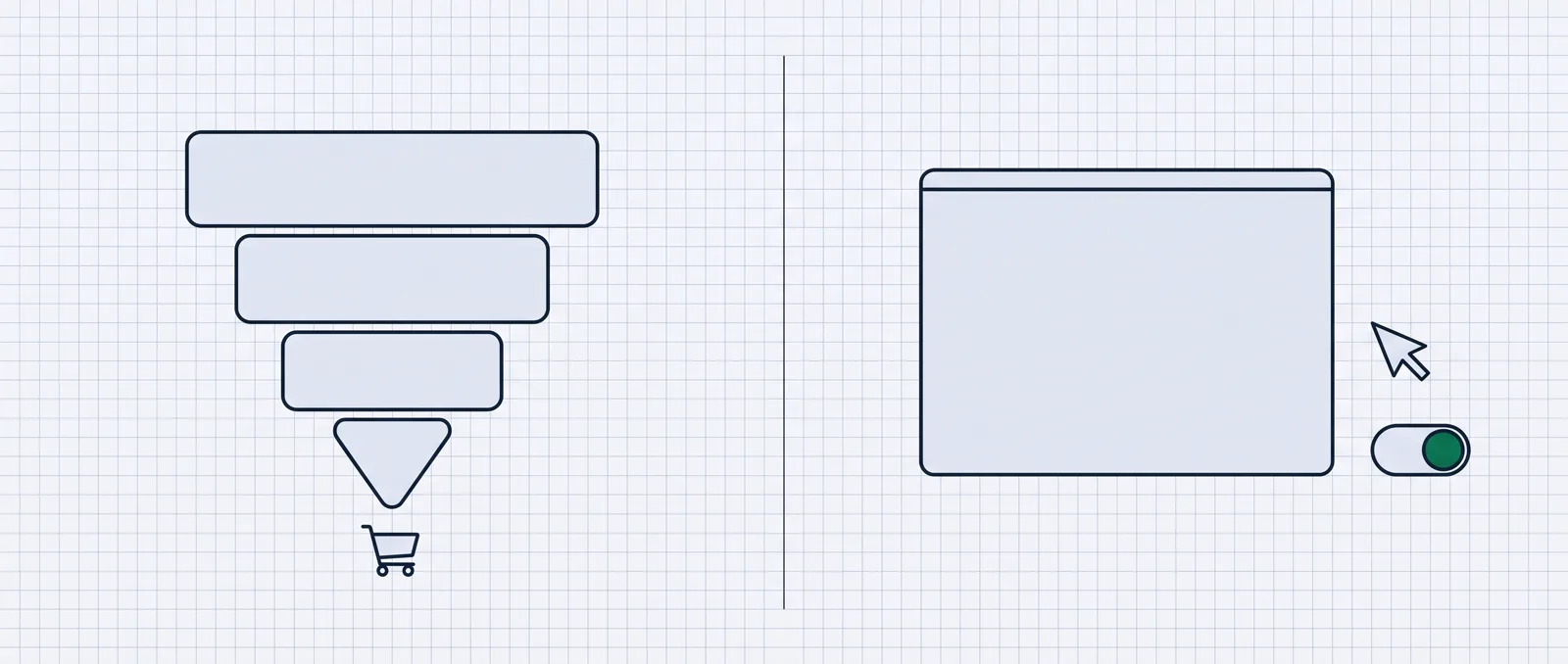
The funnel vs the pagemedia buyer software
ClickFunnels vs Landingi
By Dana Rourke, Lead reviewer. Reviewed by Campaign Buyer Editorial. Updated 29 September 2026.
Quick answer
Pick ClickFunnels if you want the pages, checkout, order bumps, upsells and email follow-up for your own offer running as one funnel you can launch fast; pick Landingi if you only need cheap, template-driven landing pages to point PPC and lead-gen traffic at, and your checkout already lives in another tool.
Side by side
| ClickFunnels | Landingi | |
|---|---|---|
| What it is | Whole-funnel platform | Landing page builder |
| Best for | Selling your own offer | Cheap PPC and lead-gen pages |
| Funnel stage | Click to paid customer | Ad click to page |
| Landing pages | Funnel pages, templated | 400+ templates, AI builder |
| Checkout | Built in, order bumps | None, hands off |
| One-click upsells | Yes | No |
| Email follow-up | Built in | No |
| Page testing | A/B testing | A/B/X, on entry plan |
| Visitor caps | None | Every plan capped |
| Cut of sales | None | None |
| Track record | 10+ yrs, 4.6/5 | 10+ yrs, 4.5-4.8 |
| Entry price | $97/mo | $29/mo |
If you are down to ClickFunnels and Landingi, the first thing to settle is that they are not the same size of tool. ClickFunnels is a whole-funnel platform: it builds the pages, takes the payment, runs the order bumps and upsells, and follows up by email, all inside one account. Landingi builds and hosts a landing page, and then hands the visitor to whatever checkout you already run. One tool covers the path from click to paid customer. The other covers the page at the front of it. That gap, not the feature checklist, is what should decide this.
ClickFunnels is our pick between the two for the reader this site is written for: someone buying traffic to sell their own offer, who wants the checkout, the upsells and the follow-up on the same platform as the page. Landingi is the sharper choice when the job really is just the page, the budget is tight, and the checkout is staying exactly where it is. Both are honest answers. Picking the wrong one means either paying three times over for tools you never open, or shipping a page with nothing behind it to take the money.
The one question that decides it
Do you need one tool to take the sale, or only to build the page?
Pick ClickFunnels when you are selling your own offer and the money runs through a checkout, a bump and an upsell you want to control in one place, with email follow-up wired to the same account. Pick Landingi when the problem is the page itself: the message, the layout, getting a campaign page live this afternoon without a developer, and your checkout already lives in Shopify, a cart tool or your own store. Answer that honestly and the comparison is close to over, because the two tools barely compete for the same job.
The case for ClickFunnels
ClickFunnels is one of the names that made "sales funnel" a category, and after more than a decade it is still one of the most recognised funnel builders online. The pitch is a funnel-first platform that runs the whole path from click to customer in one place: landing and sales pages, a checkout with order bumps and one-click upsells built for raising average order value, email follow-up, a light CRM, courses and a community. Its drag-and-drop editor and prebuilt funnel templates are the most-praised part, especially for non-technical sellers, and the aggregate scores back that up at about 4.6 out of 5 across more than 400 G2 reviews and thousands of Trustpilot ratings.
The trade-offs are real and worth naming. ClickFunnels sits at the top of the market on price: plans run $97 to $297 a month, and users say the cost adds up fast if you only need part of it. Billing and cancellation draw the loudest complaints, along with confusion between the older Classic accounts and the newer 2.0, and some long-time users feel 2.0 was a step back. Course and membership delivery is weaker than a dedicated platform. It takes no cut of your sales and includes hosting, so the monthly plan is the whole software bill, but that plan is the reason a page-only buyer overpays here.
The case for Landingi
Landingi wins on the thing a cost-conscious media buyer checks first: entry price, and how fast a page goes live. Build opens at $29 a month, A/B/X testing is included rather than gated behind a premium tier, and there are more than 400 templates plus an AI generator called Lunar, so a non-designer gets a campaign page up the same afternoon. It has been building pages for over a decade, and its review scores hold up (G2 4.5, Capterra 4.8, Trustpilot 4.1). Publishing is flexible: your own domain, a WordPress plugin, Landingi hosting or your own server. Server-side A/B testing and EventTracker behavioural analytics arrive on the mid Optimize tier.
What you trade is the top of the feature set and the rest of the funnel. The editor is more rigid than the premium builders, mobile layouts often need manual cleanup, and dynamic text and server-side testing sit behind higher tiers. Every plan caps monthly visits, and the AI features draw on a credit allowance you can run out of. Watch the fine print: add-on domains are $5 a month each and keep billing after you cancel the core plan until the paid period ends, which has caught buyers out for months. And Landingi does not take the money. There is no native cart, no order bumps, no one-click upsells and no email follow-up, so everything after the page stays on a second tool.
They cover different amounts of the sale
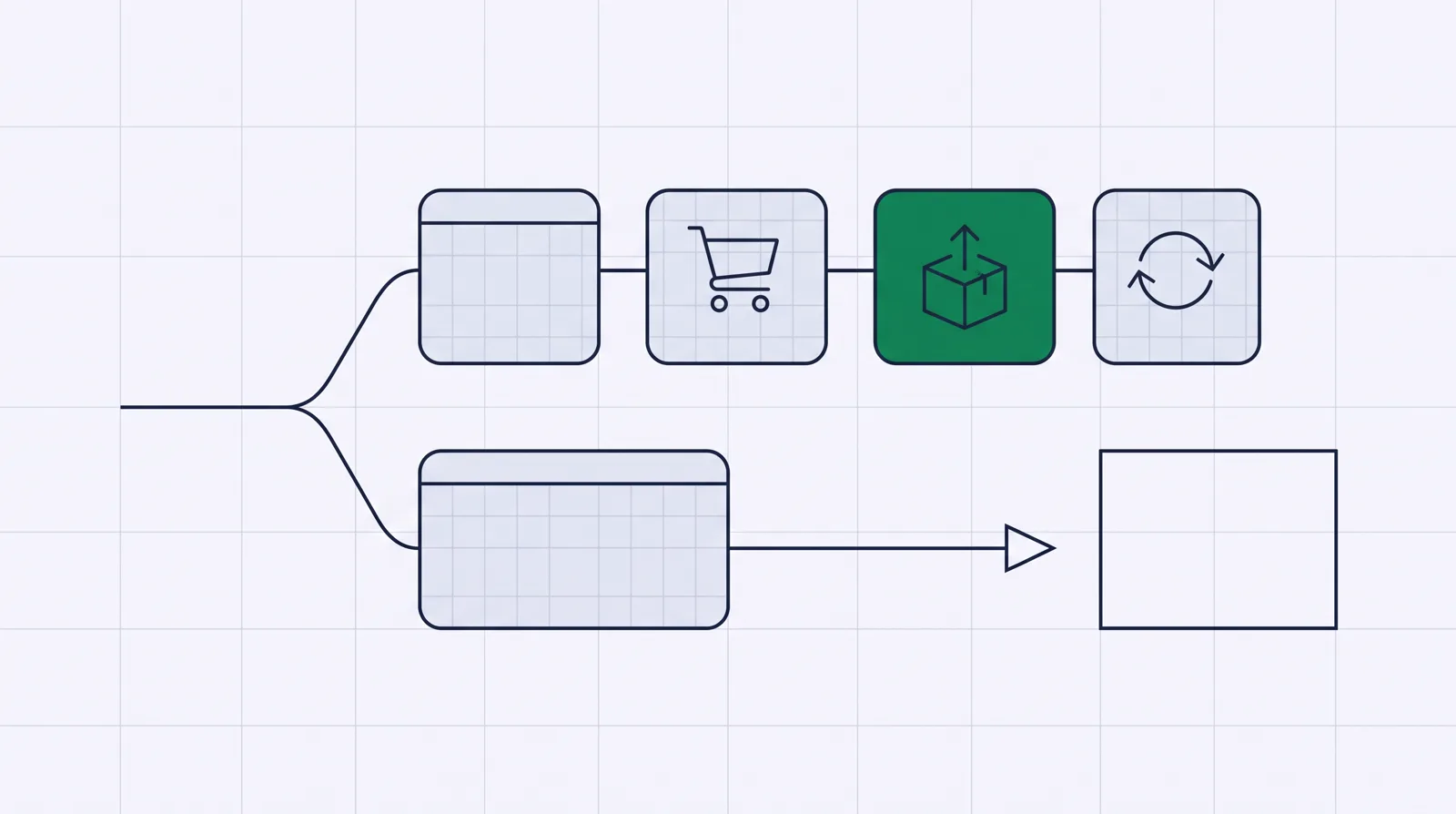
The reason this comparison feels lopsided is that one tool runs the whole sale and the other runs the front of it. ClickFunnels carries the page, the checkout, the upsell and the rebill inside one account. Landingi builds the page and hands the visitor off. If your campaign gets clicks but the sale is failing at the cart, the upsell or the follow-up, Landingi cannot fix that, because those things happen outside it. If your only weak spot is the page and you already have a checkout you trust, ClickFunnels is a lot of platform to buy for a job Landingi does for $29. Name where your funnel actually leaks and the choice follows.
If you buy paid traffic and want it all on one record
There is a third option that fits the reader neither of these serves cleanly: the paid-traffic team that wants ClickFunnels' whole-funnel scope but built around the ad click rather than around a creator selling to an audience. ElasticFunnels is a funnel platform for exactly that team, and it competes with both tools on this page. It builds the pages, including an AI builder that writes one from a prompt or clones one from a URL, and its lead capability is same-URL split testing: variants rotate server-side under a single campaign link, so Meta, Google and TikTok keep their learning and a test never sends the ad back through review. ClickFunnels' A/B testing and Landingi's A/B/X both swap the URL, which is the difference a media buyer feels.
Past the page it hosts the checkout with order bumps, one-click upsells, subscriptions and routing across several merchant accounts, and it keeps the click, the order, the rebill and the refund on one timeline with a CRM, automations and a call center on the same data. Multi-account routing matters most to sellers running several merchant accounts; a seller on a single Stripe or NMI account still gets the pages, the same-URL tests, the checkout and the attribution. The honest limit is proof: ElasticFunnels is newer than both ClickFunnels and Landingi, and there is very little independent third-party review coverage to check its claims against, which is what you would expect of a platform this recent beside two tools that have been around more than ten years. That gap is about outside evidence, not the feature set, and until you run real volume through it you are largely taking the vendor's word for how it holds up. The 14-day trial takes no card, every feature is on every plan, and Starter is $97 a month, so the cheapest way to settle it is to build a page, wire the checkout and watch the reporting on your own funnel. Revenue through an ElasticFunnels-hosted checkout carries a 0.5% fee; sales on outside platforms and networks do not. Keep it on its own line of the decision, not as a tiebreaker between these two.
Which one for you
You sell your own offer and want the whole funnel in one account: ClickFunnels. Pages, checkout, order bumps, upsells and email follow-up run together, it launches fast, and it takes no cut of your sales. Accept the top-of-market price and check the cancellation terms before you commit.
You only need a cheap page to point PPC and lead-gen traffic at: Landingi. A $29 entry plan with A/B/X testing included, 400-plus templates and an AI generator get a page live fast and keep the bill small. Accept the rigid editor, the visit caps and the $5 add-on domain billing after you cancel, and keep your checkout where it is.
You buy paid traffic and want the page, the same-URL test and the checkout on one record: look at ElasticFunnels alongside them, with the newness caveat in mind, but only if you genuinely want one platform to own the whole path rather than a page or a funnel aimed at a warm audience.
How we reached the verdict
We read each vendor's current pages and pricing, then long-term user reports and review-site feedback for the things product pages do not show well: price pressure, billing and cancellation, the learning curve and where each tool stops. We did not run live campaigns through either platform. Prices on this page were verified against each vendor in September 2026 and should be checked again before you buy.
ClickFunnels
What works
- Runs the whole funnel in one account: pages, checkout, email, a light CRM, courses and a community, so you are not stitching four tools together
- Fast to get live. The drag-and-drop editor and prebuilt funnel templates are the most-praised part, especially for non-technical sellers
- Smart Checkout is built for selling, with order bumps and one-click upsells aimed at raising average order value
- Strong aggregate scores: about 4.6 out of 5 across more than 400 G2 reviews and thousands of Trustpilot reviews
- Takes no cut of your sales, includes hosting, and carries a 30-day money-back guarantee
What to watch
- Priced at the top of the market. Plans run $97 to $297 a month, and users say the cost adds up fast, especially if you only need part of it
- Billing and cancellation are the loudest complaints, along with confusion between ClickFunnels Classic and the newer 2.0 accounts
- Some long-time users feel 2.0 was a step back from Classic, and marketers report occasional bugs and page speed that is hit or miss
- Less flexible than a custom stack, and course and membership delivery is weaker than a dedicated platform
Landingi
What works
- 400+ templates and an AI page generator (Lunar) get a campaign page live fast, no developer needed
- Noticeably cheaper than Unbounce or Instapage for the same lead-gen and PPC job, with A/B/X testing included
- Server-side A/B testing, EventTracker behavioural analytics and 170+ integrations from the mid Optimize tier
- Flexible publishing: your own domain, a WordPress plugin, Landingi hosting or your own server
- Support gets consistent praise on G2 and Capterra for a builder at this price
What to watch
- The editor is more rigid than Unbounce and mobile layouts often need manual cleanup, so it is not for pixel-level design work
- Add-on domains cost $5/mo each and keep billing after you cancel the core plan until the paid period ends, which has caught buyers out for months
- No smart traffic routing, and dynamic text and server-side testing sit behind higher tiers, so it is not the top PPC feature set
- Every plan has a monthly visit cap and AI features burn a credit allowance you can run out of
- Live chat is weekday Polish business hours only, so weekend high-spend campaigns wait for a reply
Pricing
ClickFunnels: from $97/mo. Monthly: Launch $97, Scale $197 (most popular), Optimize $297; Dominate $5,997/yr, annual only. Annual billing on the lower tiers is ~15-17% off (Launch $81, Scale $164, Optimize $248/mo). 30-day money-back guarantee. ClickFunnels takes no cut of your sales. Free trial via the signup flow is currently 7 days.
Landingi: from $29/mo. Annual rates: Build $24/mo (10 active pages, 2,000 visits, 1 domain, 2,500 credits); Optimize $119/mo (100 pages, 30,000 visits, 3 domains, 10,000 credits, EventTracker and server-side A/B testing); Scale from $229/mo; Enterprise from $1,199/mo. Annual billing includes two months free. The 14-day trial is capped at 200 visits; Landingi says it sometimes requests a card.
Pricing verified against each vendor on 2026-09-29. Check before you buy.
Our pick
ClickFunnels
ClickFunnels is the pick if you sell coaching, courses or info products and want the pages, checkout, upsells and email running as one funnel instead of four separate tools. It is fast to launch and covers the whole sales process end to end. The trade-offs are real: it sits at the top of the market on price, the bill climbs as you scale, and billing and cancellation draw the most complaints.
Frequently asked questions
ClickFunnels or Landingi: which should I use?
Which is cheaper, ClickFunnels or Landingi?
Can Landingi do what ClickFunnels does?
Is ClickFunnels worth roughly three times the price of Landingi?
Is there one tool that does the page and the checkout for a paid-traffic team?
Sources
Other sources
8 discussions and reviews read for this page. Quotes are excerpts; open a link to read the original in context.
- [capterra-learn] ClickFunnels Reviews 2026 - Capterra
- [g2-threemonths] ClickFunnels Reviews - G2
- [g2-editor] ClickFunnels Pros and Cons - G2
- [trustpilot-steep] ClickFunnels Reviews - Trustpilot
- [bbb-billing] ClickFunnels BBB Complaints
- [getyourhelper-glitches] ClickFunnels Review 2025 (After Spending $20K+ on It)
- [supplygem-quirks] ClickFunnels Review: Why You'll Love or Hate It (2026)
- [marketingagency-migration] Honest ClickFunnels Review for 2026

Written by
Dana Rourke
Lead reviewer
Dana Rourke is the lead reviewer at Campaign Buyer. She owns the tracker and attribution coverage: reading what long-term users report about each tool, checking its documentation and pricing, and verifying prices with the vendor before writing the verdict. Keeping the rankings honest mostly means writing down what the top pick gets wrong, so she does that first.
Last checked 2026-09-29