You have heard the name, probably in a thread about Unbounce getting expensive, and the question is whether Landingi is the real thing or a cheaper trap. The short answer: it is real and it is established. Landingi has been building landing pages for more than a decade, the vendor counts over 500,000 marketing teams and 2.5 million pages created, and its scores hold up across the review sites (G2 4.5, Capterra 4.8, Trustpilot 4.1). Capability is not where the regret comes from. Where it comes from is the fine print, so this review spends most of its time there.
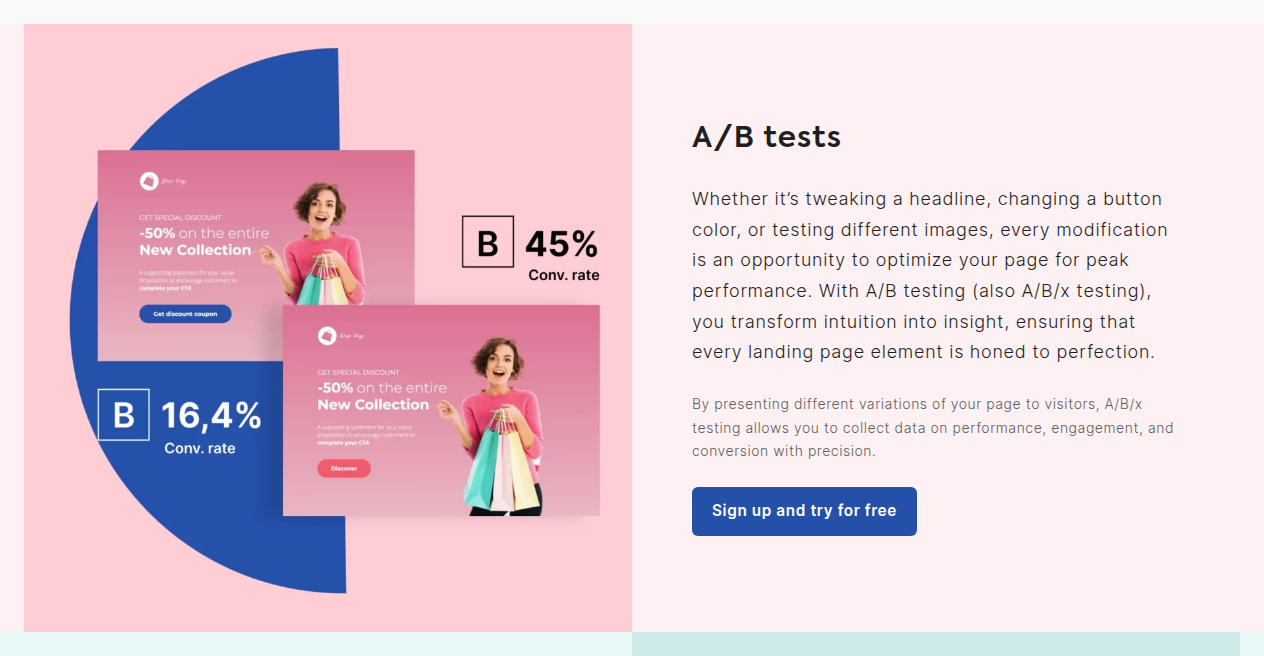
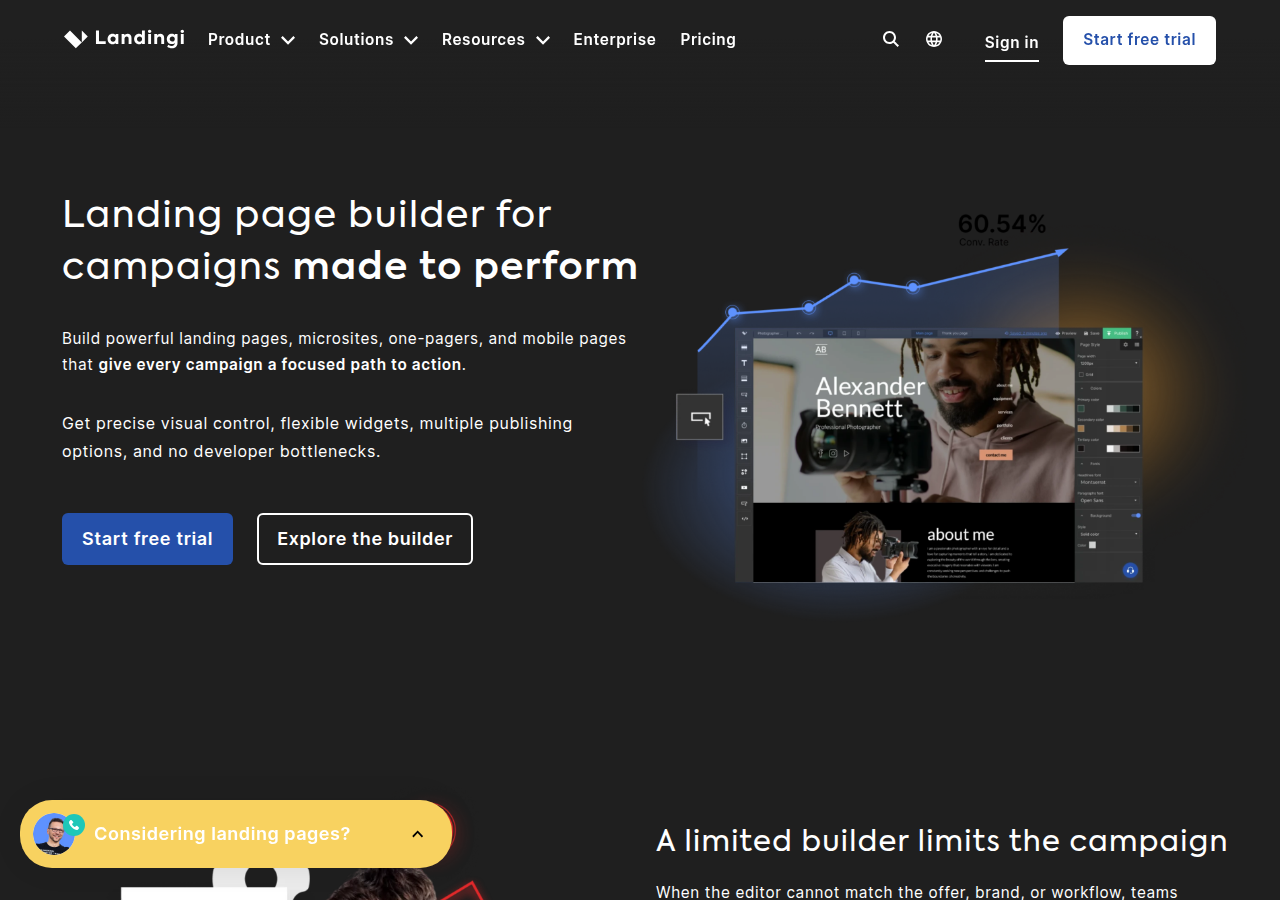
What Landingi is, at core, is a marketer-friendly landing page builder with an AI layer bolted on. You start from one of 400-plus templates or let Lunar, its AI generator, draft a page from a campaign brief, then edit in a drag-and-drop builder. From there you can run A/B/X tests, capture leads, wire the page into 170-plus integrations, and publish on your own domain, through a WordPress plugin, or on Landingi's hosting. Higher tiers add EventTracker (click, scroll and form analytics), server-side testing, sub-accounts for agencies, and Programmatic Landing Pages that spin up page variants in bulk from a spreadsheet.
The honest way to place it is as a lower-cost Unbounce. That is how long-term PPC users describe it too. One who tried it when Unbounce raised prices called it "heavier to manipulate" and "a little more rigid," while still usable for landing-page tests. That trade is the whole decision. If your campaigns lean on message match (the page headline echoing the exact search query) Unbounce's dynamic text and Smart Traffic routing are the reason serious Google Ads teams still name it first, and Landingi does not match that top of the feature set. If you are producing a steady stream of straightforward campaign and lead-gen pages and want to pay less, Landingi does that job.
The regret risk that comes up most is not the product, it is the bill. Extra custom domains are $5 a month each, and cancelling your core subscription does not stop those add-on charges. Your account stays active until the paid period ends, and the domain fees keep running until then. A Trustpilot reviewer put it plainly after cancelling: "I then cancelled my subscription but still kept getting invoiced for 2 months until I noticed because they were charging me $5 per domain." It is not a scam so much as a billing model that assumes you will clean up your add-ons yourself. Before you cancel, remove every extra domain, screenshot the confirmation, and keep the billing emails.
Two smaller things to price in. First, every plan carries a monthly visit cap, from 2,000 on the entry Build plan up to 1M+ on Enterprise, and the AI features run on a monthly credit allowance that heavier users report running out of. Second, live human support is weekday Polish business hours, roughly 9 to 5 CET, with email and an AI chat outside that window. If you buy high-spend traffic that breaks something on a Saturday, you wait. For most lead-gen teams that is fine; for a weekend-heavy media buyer it is worth knowing before you commit.
Over longer use, the recurring gripes are mild: the editor can slow down or freeze when you pile elements onto a page (a multi-year user described it as "sometimes it gets a bit slow when I'm adding stuff, and it freezes a little"), mobile layouts need hand-tidying, and the built-in analytics stay basic until you climb the tiers. None of these is a dealbreaker, and support gets genuine praise for a builder at this price.
So, will you regret it? Not on capability. You would regret it if you needed Unbounce-grade PPC features and expected Landingi to match them, or if you attached a stack of domains and never cleaned them up before cancelling. Trial it (the 14 days needs a card and caps you at 200 visits), build the two or three page types you actually run, and check the editor holds up on mobile for your templates. If it does, it is one of the better-value landing page builders in the category.