Budget page vs full suitemedia buyer software
Landingi vs Kartra
By Dana Rourke, Lead reviewer. Reviewed by Campaign Buyer Editorial. Updated 3 October 2026.
Quick answer
Pick Landingi if you want a cheap, template-driven landing page builder to point paid traffic at, with A/B/X testing included on the entry plan, while your checkout, email and courses live elsewhere; pick Kartra if you sell courses, coaching or memberships to an audience you build and want the pages, checkout, email, memberships and an affiliate manager running from one login.
Side by side
| Landingi | Kartra | |
|---|---|---|
| What it is | Budget page builder | Bundled creator suite |
| Best for | Cheap pages for ad traffic | Selling to an audience you build |
| Landing pages | Specialist, 400+ templates | Pages inside a funnel builder |
| Split testing | A/B/X on entry plan | A/B testing |
| Message match | Dynamic text, higher tiers | No dynamic text |
| Checkout | None, hands off | Order bumps and upsells |
| Email and SMS | None, hands off | Email and SMS |
| Courses, memberships | None | Included, deeper |
| Affiliate manager | No | Yes |
| Cut of sales | None | 5% entry, 0% above |
| Visitor caps | Every plan capped | Contact caps by plan |
| Entry price | $29/mo | $59/mo (most pay $119) |
If you have narrowed the whole market to Landingi and Kartra, the useful thing to say up front is that these two were built for different jobs. Landingi is a budget, template-driven landing page builder for people who point paid traffic at a page and want it live the same afternoon without paying enterprise money. Kartra is a bundled suite for selling to an audience you build: pages and funnels, a checkout, email and SMS, memberships and courses, an affiliate manager and a helpdesk, all behind one login.
So the decision is less about which draws a nicer page and more about how much of your business you want one tool to run. Buy Landingi expecting it to take payments and send email sequences and you hit its edge fast. Buy Kartra for its page builder alone and you are renting a whole suite to open one corner of it. Settle which of those two you are before you weigh a single feature.
The one question that decides it
Are you buying a cheaper page to point your ads at, or a whole business to run behind the sale?
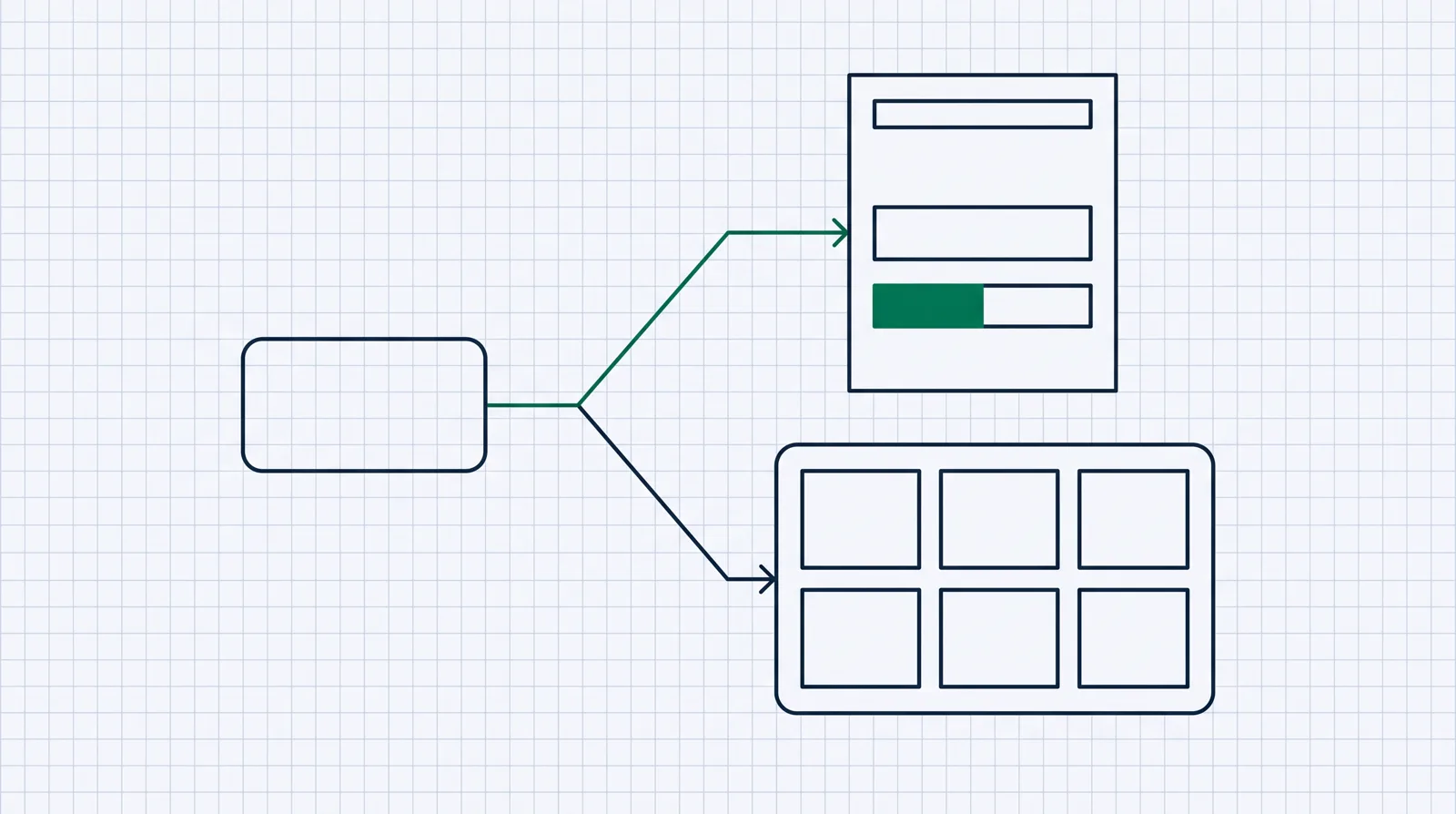
Answer that first. If your job is campaign pages for paid traffic, you want them up fast and cheap, you need A/B testing from the plan you actually sign up for, and your checkout, email and course delivery already live somewhere else, you are Landingi's buyer. If you want to run the whole selling operation from one account, the pages, the payment, the follow-up and the member area, you are Kartra's buyer.
Everything else follows from that. Landingi will not take a payment or send an email sequence, because that is not what it is. Kartra will build a page, but the page is one module of a suite you are really paying for its checkout, its email and its course area. The common regret is picking the one built for the other person.
Landingi: the cheap page for ad traffic
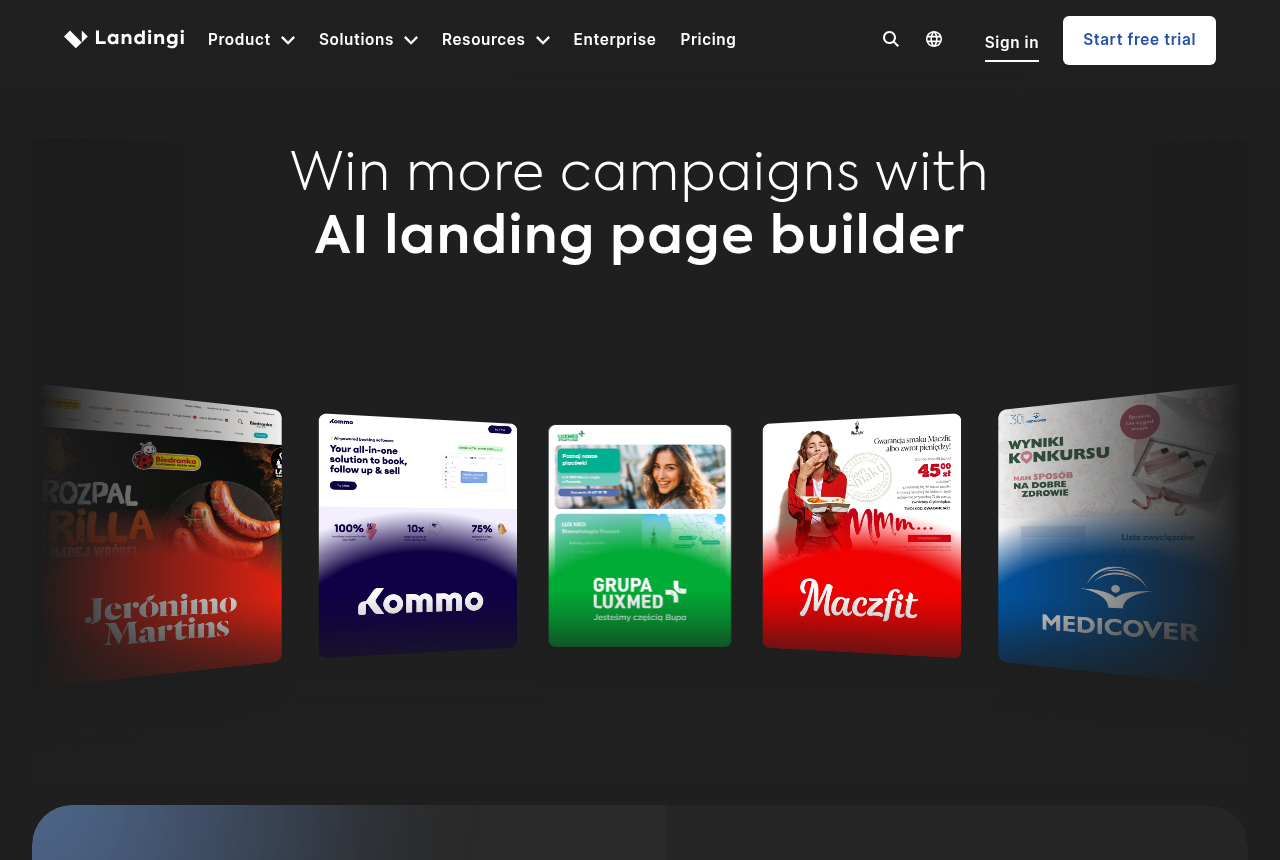
Landingi is a hosted landing page builder aimed at the cost-conscious PPC and lead-gen buyer. Its pitch is speed and price: more than 400 templates and an AI generator called Lunar get a campaign page live without a developer, A/B/X testing is included on the entry plan rather than gated behind a premium tier, and publishing is flexible, your own domain, a WordPress plugin, Landingi hosting or your own server. It has been building pages for more than a decade, the vendor counts over 500,000 teams, and its review scores hold up (G2 4.5, Capterra 4.8, Trustpilot 4.1). Support gets consistent praise for a builder at this price.
The catch is polish and the top of the feature set. The editor is more rigid than Unbounce, mobile layouts often need manual cleanup, and it is not the tool for pixel-level design work. There is no smart traffic routing, and dynamic text replacement plus server-side testing sit behind higher tiers, so a keyword-heavy paid-search strategy does not get its best features on the cheap plan. Every plan caps monthly visits, and the AI features burn a credit allowance you can run out of. Watch the fine print too: add-on domains cost $5 a month each and keep billing after you cancel the core plan until the paid period ends, which has caught buyers out for months.
What Landingi does not do is anything after the page. It has no cart, no native email or SMS, no memberships or courses and no automations. It hands the lead or the click to whatever you use to charge and nurture. That is the right scope for lead capture and click-through campaigns, and it is the exact edge Kartra is built to erase.
Kartra: the whole creator business in one login
Kartra is best understood as a marketing suite for someone selling to an audience they build: coaches, consultants and course creators. Kartra Inc., part of Genesis Digital, has run it since 2018, and it lists more than 60,000 customers, so capability is not the risk. Behind one login it bundles pages and funnels, a checkout with order bumps and one-click upsells, email and SMS, memberships and courses, calendars, an affiliate manager and a helpdesk. A funnel mapper lets you plan and simulate a multi-page journey before you build it, and more than 100 campaign templates mean you rarely start from a blank page. Where Landingi stops at the page, Kartra is built around the whole path from sign-up to sale to delivery.
The honest costs are specific. Support speed is the loudest complaint from long-term users, with Trustpilot reviewers in 2025 reporting waits of up to a week, which hurts most during a launch when something breaks. The editor is capable but slow, and reviewers describe lag and simple edits taking too many steps, so stress-test it on the trial before you build anything real. And the entry price misleads: the $59 Essentials plan takes 5% of every sale and caps you at 500 contacts, five pages and one product, so most real businesses need Starter at $119 a month or higher, where the cut disappears.
Kartra also is not a full CRM. It tracks contacts, tags and purchases, but it has no deal stages, forecasting or task management, so a sales team that lives in a pipeline will feel the gap. Building everything inside one platform means lock-in, too, since the work does not transfer cleanly if you leave. None of that stops it being a real, well-used tool. It earns its price only when you use most of the suite, not one corner of it.
Where they overlap, and where they don't
The overlap is thin. Both build a landing page and run an A/B test. But a Landingi page is a dedicated post-click asset you point ads at and test cheaply, while a Kartra page is one module built to feed its own funnels. Neither has dynamic text replacement to match the headline to the keyword, and neither routes traffic automatically, so for message-match-heavy paid search a specialist like Unbounce still beats both.
The gap is everything after the page. Landingi hands the lead or the buyer to whatever you use to charge and nurture them. Kartra takes the payment, delivers the course, and follows up by email and SMS on an automation you build once. So the real question is never which one draws a better page. It is whether you want a tool that captures a conversion and stops, or a suite that captures a buyer and then runs the whole relationship.
A third option for a paid-traffic seller
Both Landingi and Kartra assume the hard part is either the page or selling to an audience you already own. If you buy your own paid traffic to make sales, the hard part is often somewhere neither of them looks: the split test that must not reset the ad platform's learning, and the checkout that turns a click into a tracked sale. ElasticFunnels is a funnel platform built for that reader, the affiliate, product vendor, agency or ecommerce brand running campaigns on Meta, Google and TikTok. It builds the pages, including an AI builder that writes a page from a prompt or clones one from a URL, but its defining feature is same-URL split testing: variants rotate server-side under one campaign link, so the ad platform keeps its optimization and a test never sends the ad back through review. Around that sit a hosted checkout with order bumps, one-click upsells and native subscriptions, click-to-sale attribution that keeps the click, order, rebill and refund on one record, and a CRM, automations and a call center on the same data.
Set against these two, it sits in a different place than either. It is not the cheap, template-first page builder Landingi is, up and running for a small monthly bill with no checkout to think about. And it is not built to sell courses and memberships to a built audience the way Kartra is. It is the build-and-sell layer a performance team lives in after the click, and what it adds over both is the testing that does not reset ad learning and one source of truth for paid campaigns. Multi-account payment routing can cascade a charge across the merchant accounts you connect, which matters most to a seller already running several; a seller on a single Stripe or NMI account still gets the pages, the same-URL testing, the checkout, the attribution and the CRM, just not that routing edge.
The caveat that matters most is proof. ElasticFunnels is newer than either of these, and there is very little independent third-party review coverage to check its claims against, so until you run real volume through it you are largely taking the vendor's word for how it holds up. That is what you would expect of a platform this young next to two established names, and it weighs most if you lean on years of public reviews before trusting a tool. It offers a 14-day trial with no card, every feature is on every plan from $97 a month, and it adds 0.5% only on revenue through its own hosted checkout, so you can prove the split testing and the checkout on your own funnel first. For the reader genuinely choosing between a budget page builder and a creator suite, Landingi and Kartra remain the direct answers; keep ElasticFunnels on its own line, for the paid-traffic team whose profit turns on the split test and the checkout.
Pricing: two different meters
The entry prices mislead. Landingi opens at $29 a month on Build, or $24 billed annually, with A/B/X testing included, but dynamic text and server-side testing sit on higher tiers, every plan caps monthly visits, and Optimize runs $119 with Scale from $229 as caps and features grow. Kartra bills flat with no usage fees, but its $59 Essentials plan takes 5% of every sale and caps you at 500 contacts, five pages and one product, so most sellers move to Starter at $119 a month, where the cut disappears. So Landingi is a small, capped bill you size to page volume, while Kartra is a flat bill you size to the suite you will actually use. Price each on the tier that carries what you use, and check both vendors' current pages before you buy.
Which one for you
You want a cheap page to point PPC and lead-gen traffic at: Landingi. A $29 entry plan with A/B/X testing included, more than 400 templates and an AI generator get a campaign page live fast and keep the bill small. Accept the rigid editor and the mobile cleanup, watch the $5 add-on domain billing after you cancel, and remember it stops at the page.
You sell courses, coaching or memberships to an audience you build: Kartra. The checkout with bumps and upsells, email and SMS, the member area and the affiliate manager are the whole point, and one flat bill replacing four subscriptions is where it pays for itself. Test the editor and time a support reply on the trial before you commit, and price it on Starter, not the 5% Essentials plan.
You buy your own paid traffic and your profit turns on the split test and the checkout: look at ElasticFunnels alongside them, with the newness caveat above in mind. Read our full Landingi review and Kartra review first, and browse the other head-to-heads and the full ranking before you commit.
Landingi
What works
- 400+ templates and an AI page generator (Lunar) get a campaign page live fast, no developer needed
- Noticeably cheaper than Unbounce or Instapage for the same lead-gen and PPC job, with A/B/X testing included
- Server-side A/B testing, EventTracker behavioural analytics and 170+ integrations from the mid Optimize tier
- Flexible publishing: your own domain, a WordPress plugin, Landingi hosting or your own server
- Support gets consistent praise on G2 and Capterra for a builder at this price
What to watch
- The editor is more rigid than Unbounce and mobile layouts often need manual cleanup, so it is not for pixel-level design work
- Add-on domains cost $5/mo each and keep billing after you cancel the core plan until the paid period ends, which has caught buyers out for months
- No smart traffic routing, and dynamic text and server-side testing sit behind higher tiers, so it is not the top PPC feature set
- Every plan has a monthly visit cap and AI features burn a credit allowance you can run out of
- Live chat is weekday Polish business hours only, so weekend high-spend campaigns wait for a reply
Kartra
What works
- Genuinely covers the whole creator business under one roof: pages and funnels, email and SMS, a checkout, memberships and courses, calendars, affiliates and a helpdesk, so you stop paying for and wiring together five separate tools.
- Checkout is designed for selling, not just collecting money. You get branded order forms, coupons, buy-now-pay-later through Klarna, and one-click upsells aimed at lifting average order value.
- The funnel mapper lets you plan and simulate a multi-page journey before you build it, and more than 100 done-for-you campaign templates mean you rarely start from a blank page.
- Established and widely used. Kartra Inc. (Genesis Digital) has run it since 2018, with 60,000-plus customers, and billing is flat-rate with no surprise usage fees stacked on top.
- Plans above the entry tier take 0% of your sales, and a 30-day money-back guarantee lets you build a real funnel before you commit.
What to watch
- Support speed is the loudest complaint from long-term users. Trustpilot reviewers in 2025 report waits of up to a week for simple questions, which hurts most during a launch when something breaks.
- The editor is capable but slow. Reviewers describe lag and glitches, and simple edits taking too many steps. Stress-test it on the trial before you build anything real.
- It is expensive unless you use the whole suite. Buy it for one job, a landing page or email alone, and cheaper single-purpose tools win on price.
- The entry Essentials plan takes 5% of every transaction and caps you at 500 contacts, 5 pages and one product, so most real businesses need Starter at $119/mo or higher.
- It is not a full CRM: it tracks contacts, tags and purchases but has no deal stages, forecasting or task management if a sales team lives in a pipeline. And building everything inside one platform means lock-in, since the work does not transfer cleanly if you leave.
Pricing
Landingi: from $29/mo. Annual rates shown in the current catalog: Build $24 per month for 10 active pages and 2,000 visits; Optimize $119 for 100 pages, 30,000 visits, EventTracker and server-side A/B testing; Scale from $229; Enterprise from $1,199. Annual billing includes roughly two months free. The trial is capped at 200 visits and Landingi says it may request a card.
Kartra: from $59/mo. Monthly (annual in brackets): Essentials $59 ($52), Starter $119 ($99), Growth $229 ($189), Professional $549 ($429). Essentials charges 5% transaction fees; Starter and up are 0%. Kartra offers a 14-day free trial and a separate 30-day money-back guarantee.
Pricing verified against each vendor on 2026-09-30. Check before you buy.
Our pick
Landingi
Landingi is the pick if you want a cheaper, template-driven landing page builder for PPC and lead-gen campaigns and you can live without Unbounce's dynamic text and smart routing. Watch the add-on billing.
Frequently asked questions
Landingi or Kartra: which should I use?
Which is cheaper, Landingi or Kartra?
Can Kartra do Landingi's job for paid campaigns?
Does Landingi include a checkout, email or a course area?
I buy my own paid traffic to cold offers. Which one?
Sources
Other sources
2 discussions and reviews read for this page. Quotes are excerpts; open a link to read the original in context.
- [capterra-sections] Landingi reviews
- [g2-mobile] Landingi reviews

Written by
Dana Rourke
Lead reviewer
Dana Rourke is the lead reviewer at Campaign Buyer. She owns the tracker and attribution coverage: reading what long-term users report about each tool, checking its documentation and pricing, and verifying prices with the vendor before writing the verdict. Keeping the rankings honest mostly means writing down what the top pick gets wrong, so she does that first.
Last checked 2026-10-03