AdSpy vs Anstrex
By Dana Rourke, Lead reviewer. Reviewed by Campaign Buyer Editorial. Updated 23 September 2026.
Quick answer
Pick AdSpy if you buy on Facebook and Instagram and want the deepest searchable archive of Meta ads, offers and landing pages; pick Anstrex if you run native or push traffic on Taboola, Outbrain or MGID and need to rip competitors' advertorials and presell pages.
Side by side
| Tool | Meta ads | Native ads | Landing pages | From |
|---|---|---|---|---|
| 1. AdSpy | ✓Yes | ×No | Shows tech | $149/mo |
| 2. Anstrex | ×No | ✓Yes | Full rip | $79.99/mo |
AdSpy and Anstrex both call themselves ad spy tools, and buyers who are down to these two usually assume they are choosing between two versions of the same thing. They are not. They watch different halves of the internet. AdSpy indexes Facebook and Instagram. Anstrex indexes native and push. The decision is not really about which is the better product. It is about which ad ecosystem your money is going into.
The one question that decides it: where does your traffic come from?
Answer this before you compare a single feature. If you buy paid social, your competitors' ads live inside Facebook and Instagram, and only AdSpy keeps a deep, searchable record of them. If you buy native or push, your competitors are running advertorials on Taboola, Outbrain, MGID and dozens of smaller networks, and AdSpy cannot see any of it. Anstrex is built for exactly that traffic.
That is why the two are not substitutes. A Facebook buyer who saves money on Anstrex has bought a tool that is blind to the ads they need to study. A native buyer who pays more for AdSpy has bought depth on a channel they do not run. Match the tool to your traffic first, and the rest of this comparison is detail.
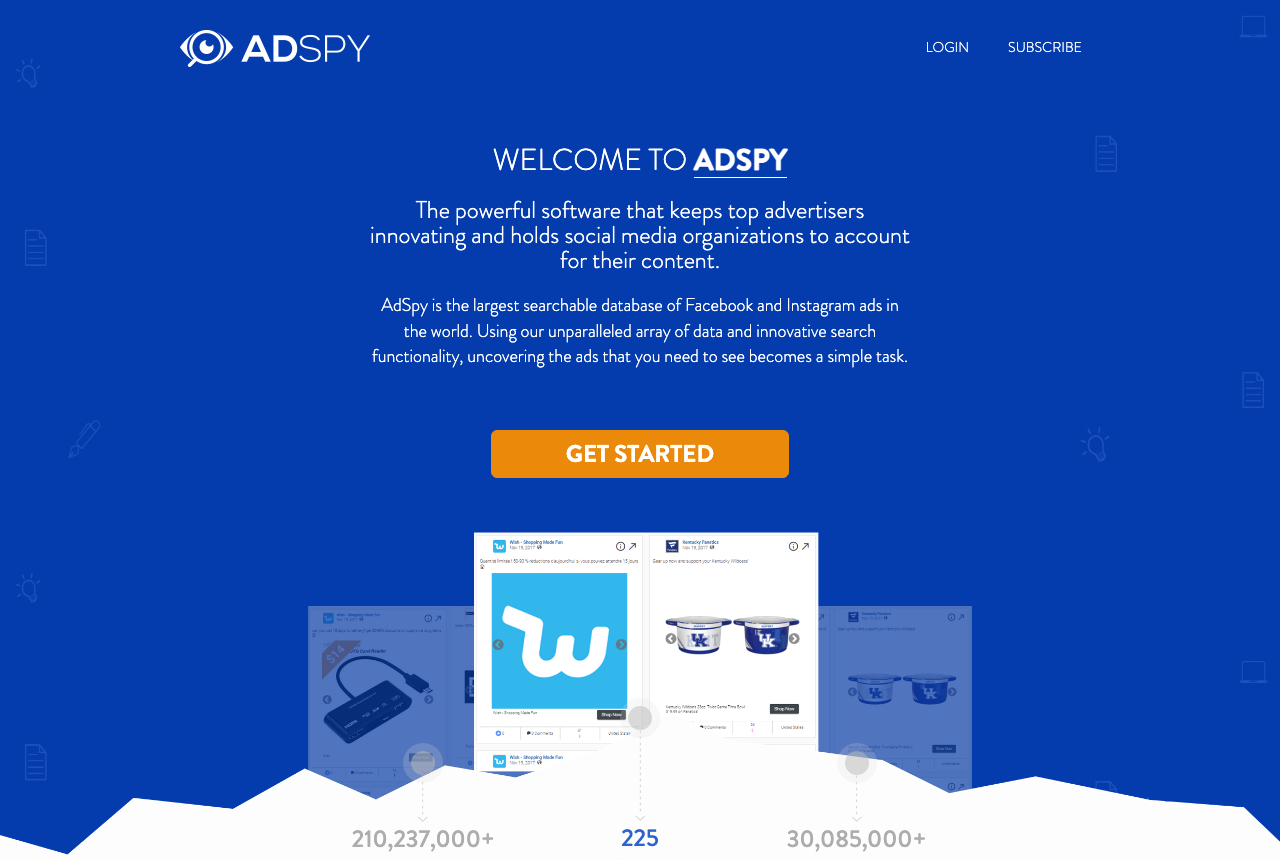
AdSpy: the deepest Meta and Instagram archive
When the job is to reverse-engineer what is working on Facebook and Instagram, AdSpy has the largest archive and the sharpest filters in this pair. You can search by advertiser page, ad copy, reactions and comments, country, offer id, affiliate network and even the technology a landing page is built on. For an affiliate or dropshipper hunting a proven angle before spending on it, that filter set is the reason to be here.
The coverage stops at Meta. AdSpy does not track native, push, TikTok or Google. If your paid social is the campaign, that is not a limitation. If it is one of several channels, AdSpy answers only the Facebook part of the question, and you still need something else for the rest.
Anstrex: the native and push specialist
If your traffic comes from Taboola, Outbrain or MGID, a Facebook spy tool is useless to you, and Anstrex is the one built for the job. Anstrex Native covers 27-plus native networks across dozens of countries, and it adds a separate push product for push and pop traffic. Its standout is landing-page ripping: it downloads a competitor's advertorial and presell page so you can study the whole funnel, not only the ad that fronts it. For native affiliates, reading the full path from headline to offer is the core workflow, and Anstrex is built around it.
Where Anstrex is weak is Facebook. Its creative coverage and its interface are aimed at performance affiliates buying native, not at a brand team studying Meta creative. A Facebook-first buyer will find it thin on the ads they care about.
Landing pages: see the tech, or rip the whole funnel
Both tools do something with landing pages, and it is not the same thing. AdSpy shows you the landing-page technology behind an ad, which helps you spot the stack a competitor runs and jump to their page. Anstrex goes further for its niche and rips the page itself, advertorial and presell included, so you can pull the funnel apart offline. If your work is native advertorials, that difference alone can decide it for Anstrex. If you buy Meta, AdSpy's lighter treatment is enough, because the creative is doing most of the work anyway.
Pricing: a flat fee versus a per-seat bill
AdSpy is a flat $149 a month for Meta and Instagram, with no per-seat math. One price, whoever logs in. Anstrex starts lower at $79.99 a month for native only, but it is billed per user, so a two or three person team multiplies that number fast, and bundling push or pop adds more on top. Neither vendor offers a real free trial. AdSpy refunds in full within 24 hours of purchase if you email support, which works as a same-day paid trial. Anstrex states in its own FAQ that it has no free trial and offers a demo instead, and it does not refund for dissatisfaction, so a wrong pick there is a full month gone. Confirm the current terms inside each vendor's checkout before you enter a card.
On sticker price Anstrex looks cheaper, and for a solo native buyer it is. Once you add seats the gap narrows, so compare on your real team size and traffic, not the headline numbers.
What neither tool does
A spy tool finds you an angle. It does not build the funnel behind it. Once AdSpy or Anstrex hands you a promising competitor page, the next steps are yours: building the presell page and checkout, and finding the variant that converts. Neither spy tool does that part, and it is a separate tool on a separate bill. ElasticFunnels is one platform that covers it: a funnel builder that generates or clones pages, hosts the checkout, and runs same-URL split tests with ad-spend and conversion reporting attached, so the spend-to-sale numbers sit in one place instead of across separate exports. It offers a 14-day trial with no card. The honest limit is that it is newer than the tools on this page, and there is very little independent third-party review coverage to check its claims against, so until you run real volume through it you are largely taking the vendor's word for how the attribution holds up. Keep it separate from your spy-tool decision rather than letting it sway one.
Which one for you
You buy Facebook and Instagram: AdSpy, without much argument. The archive depth and the affiliate filters are what you are paying for, and nothing in this pair matches them on Meta. Use the 24-hour refund as a trial and do a full day of real searching before you decide.
You buy native or push: Anstrex. It is the only one of the two that can see your competitors, and the landing-page ripper is worth the subscription on its own. Book the demo first to confirm your networks and geos are covered, then commit to one month, because there is no refund.
You buy both social and native: you are not really choosing. You need AdSpy for the Meta side and Anstrex for the native side, and the honest budget is both, at least for the months you are actively researching each channel.
AdSpy takes our default pick because more of this site's readers buy paid social than buy native, so it is the tool the larger group actually needs. That is a statement about who is reading, not about which product is better built. On its own turf, each one wins.
AdSpy
What works
- The deepest Meta and Instagram ad archive, with granular filters
- Filter by advertiser, offer id, affiliate network and landing-page tech
- Flat $149/mo with no per-seat surprises
What to watch
- Facebook and Instagram only; it is not a native spy tool
- At $149/mo it only pays off if you use it weekly
- It is a searchable database, not a creative-workflow tool
Anstrex
What works
- Purpose-built for native and push across 27+ networks
- Landing-page ripping and advertorial research for affiliate funnels
- Cheaper than high-end native intelligence platforms
What to watch
- Priced per user, so a team adds up fast
- Weak for Facebook creative strategy
- The interface is built for performance affiliates, not brand creative teams
Pricing
AdSpy: from $149/mo. $149/mo flat. 210M+ ads across 225 countries and 30M+ advertisers. Facebook and Instagram only.
Anstrex: from $79.99/mo. Native only $79.99/user a month, native plus push $139.99, native plus push and pops $219.99. Covers 27+ networks across 64+ countries. Billed per user.
Pricing verified against each vendor on 2026-09-08. Check before you buy.
Our pick
AdSpy
AdSpy is the pick if you research Facebook and Instagram ads seriously and want to search by page, offer, affiliate network or landing page.
Frequently asked questions
AdSpy or Anstrex: which should I use?
Which is cheaper, AdSpy or Anstrex?
Do I need both AdSpy and Anstrex?
Does Anstrex cover Facebook ads?
Is there a free trial for AdSpy or Anstrex?
Sources
Other sources
2 discussions and reviews read for this page. Quotes are excerpts; open a link to read the original in context.

Written by
Dana Rourke
Lead reviewer
Dana Rourke is the lead reviewer at Campaign Buyer. She owns the tracker and attribution coverage: reading what long-term users report about each tool, checking its documentation and pricing, and verifying prices with the vendor before writing the verdict. Keeping the rankings honest mostly means writing down what the top pick gets wrong, so she does that first.
Last checked 2026-09-23