A campaign click tracker against a no-code conversion feeder
BeMob vs AnyTrack
By Dana Rourke, Lead reviewer. Reviewed by Campaign Buyer Editorial. Updated 23 September 2026.
Quick answer
Pick BeMob if you buy paid traffic to affiliate or direct-response offers and want a cloud click tracker that shows which source, lander and offer converted, with a genuinely free tier to learn on and network postbacks built in; pick AnyTrack if you run a Shopify store or your own site and mainly need conversions fed back to Meta, Google and TikTok through their conversion APIs without wiring server-side tracking yourself. BeMob is the broader, cheaper campaign tracker with more outside proof to check against. AnyTrack is the no-code conversion feeder, and it earns its place when that job is the whole job, because it has no automatic ad-spend sync, thin independent reviews, and a session bill that overages on its own.
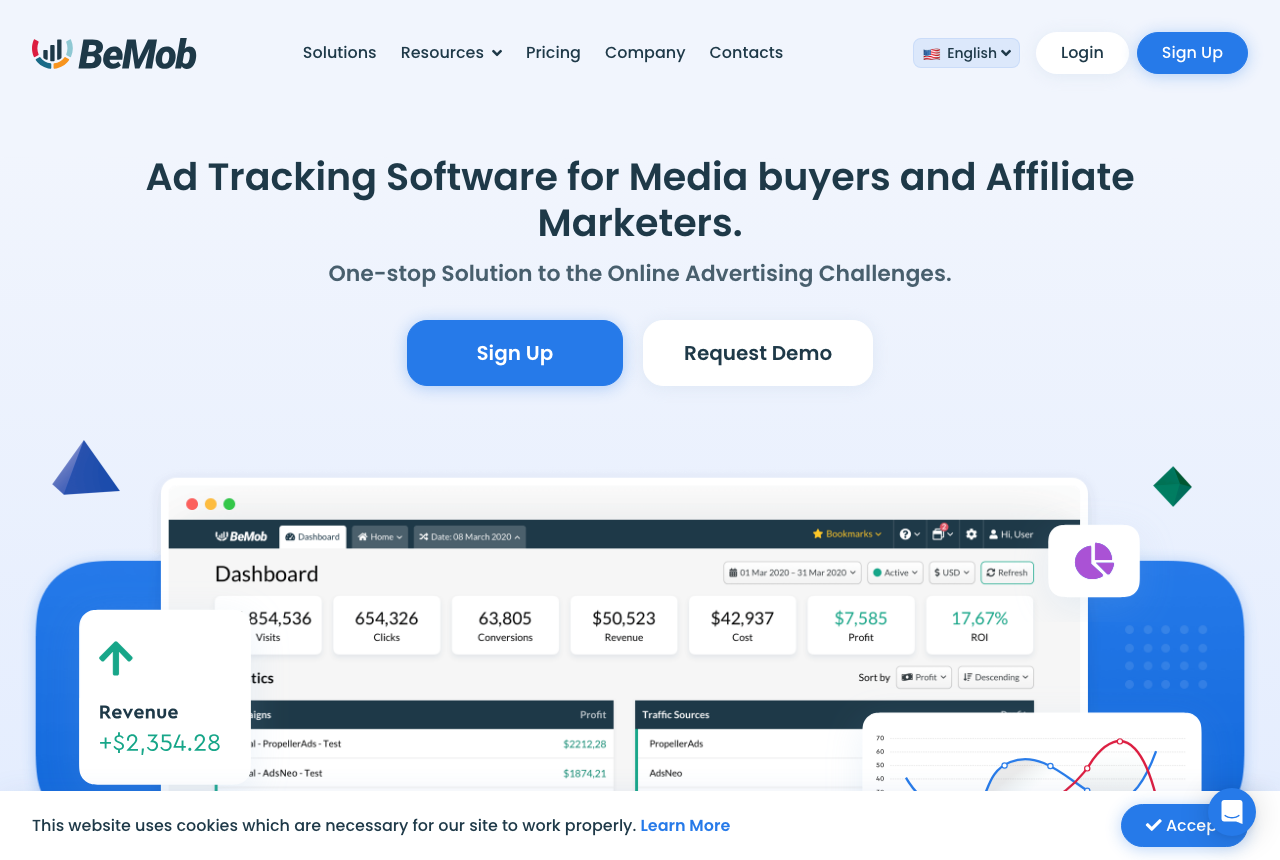
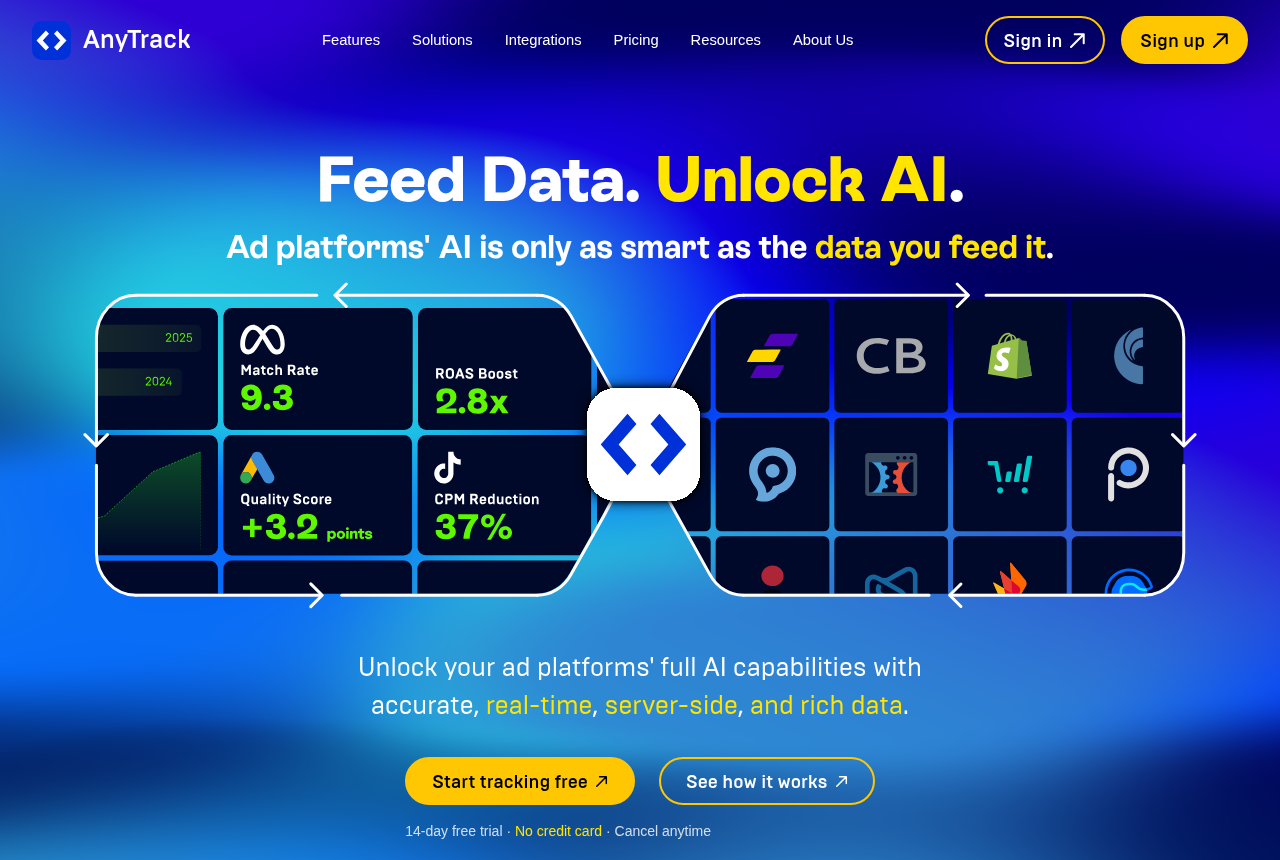
Side by side
| BeMob | AnyTrack | |
|---|---|---|
| What it is | Cloud click tracker | No-code CAPI feeder |
| Best for | Affiliate media buyers | Stores, own-site affiliates |
| What it tracks | Clicks, sources, offers | Conversions on your site |
| Feeds conversions to | Affiliate networks | Meta, Google, TikTok |
| Priced by | Events | Sessions |
| Free plan | Yes: 100K events | Yes, but no CAPI |
| Entry price | $49/mo, or free | $100/mo, or free |
| Outside proof | Established | Thin, disputed |
If your shortlist is down to BeMob and AnyTrack, you are weighing two tools that both promise numbers you can trust more than the ad account's own ROAS, and that were built for two different jobs. BeMob is a cloud campaign tracker for the buyer pushing paid traffic to offers. AnyTrack is a no-code conversion feeder for the person who runs their own site or store and wants sales fed back to the ad platforms. The reader stuck between them is really deciding which of those two problems is theirs, and once that is clear the choice makes itself.
BeMob is the budget affiliate tracker. Its free plan is not a crippled demo: 100,000 events a month, 10 campaigns, real landing-page and offer management, and reporting good enough to learn how postbacks and tokens work. Paid entry is $49 a month for a million events, and because it runs in the cloud there is nothing to install. It stamps the click, catches the conversion server-side, and hands you a record of which source, lander and offer made money. The full BeMob review covers where its depth runs out.
AnyTrack comes at conversions from the other end. It sits on your site as a no-code tag, watches every click, lead and sale, and sends those conversions back to six ad platforms server-side through each platform's conversion API. You do not stand up a server-side Google Tag Manager container or write postback logic yourself. It also covers 90-plus affiliate networks, ecommerce platforms and CRMs out of the box, so a store owner or an affiliate can wire clean data into Meta and Google without a developer. The AnyTrack review covers how well that holds up, and where the complaints cluster.
Who each one is really for
BeMob suits the affiliate or media buyer running offers, especially on pop, push and native, who wants per-event pricing and a free tier to validate a funnel before any money is on the line. It speaks the language of tracking domains, tokens and network postbacks, and it scales to millions of events without the bill jumping the way a revenue-share tool would. When the offer lives on an affiliate network, BeMob's world is your world.
AnyTrack suits a different operator: someone running a Shopify store, a lead-gen site or their own offers who buys traffic on Meta, Google or TikTok and mainly needs those conversions fed back into the ad accounts so the algorithms bid on real sales instead of a half-blocked pixel. If you have no data engineer and no appetite to build server-side tracking, the no-code setup is the draw. It is a feeder, not a campaign tracker, so it does not replace the click-level source-and-offer breakdown a media buyer optimizes on.
The dividing line is what happens after a conversion
The single distinction that should decide this is what each tool does once it records a sale. BeMob fires postbacks to your affiliate networks, which is exactly right when the offer sits on someone else's platform and you are optimizing across sources and landers. AnyTrack pushes first-party conversions into Meta, Google, TikTok and the rest through their conversion APIs, which is exactly right when you are the advertiser and the sale happens on your own site. One is built to help you read a campaign; the other is built to feed the ad platform.
There is a real gap on the media-buyer side. AnyTrack does not pull your ad spend in to compute ROI across sources the way a full tracker like Voluum or RedTrack does, so it does not answer "which of my campaigns is actually profitable" on its own. BeMob is closer to that job, though it too is a click tracker rather than a spend-blending platform. If reading profit by source is the point, the best ad tracker ranking places both against the trackers a scaled buyer graduates to.
Where the money actually goes
The two do not count the same unit, so the entry prices do not compare directly. BeMob bills by events, and an event is every impression, visit, click and conversion. That is generous at 100,000 free and cheap at $49 for a million, but impression-heavy pop or push traffic burns through the allowance quickly, and BeMob's custom tracking domains only unlock on its $249 Business plan. AnyTrack bills by sessions: a free plan capped at 5,000, then $100 a month for 100,000 on Starter, $150 for 500,000 and $300 for three million. Its free plan sends nothing through the conversion API, so the tier most people actually need starts at $100.
Watch AnyTrack's overage. Once you pass your session cap it bills automatically, from $0.40 down to $0.20 per 1,000 sessions, and you cannot switch that off on a paid plan. Count your real monthly sessions and impressions rather than your budget, and size the plan above your peak so a traffic spike does not surprise you.
The catch on each
BeMob's limit is depth, not price. Once you scale past testing it has less to offer than Voluum or RedTrack, and its event meter needs watching on impression-heavy buys. Voluum vs BeMob covers that step up, and BeMob vs ClickMagick covers the split between network postbacks and first-party CAPI if that is your real question.
AnyTrack's catch is support and proof. Unanswered tickets and trial-cancellation disputes recur across Trustpilot and PPC threads, and the outside record is thin: two reviews on G2 and 3.4 out of 5 from eleven reviews on Trustpilot make it hard to sanity-check against the crowd. Test the support inside the 14-day trial, which takes no card, before you commit a budget.
A third path if you host the funnel yourself
Both of these track traffic that lands on pages and checkouts you host somewhere else. If you are still deciding where the funnel itself lives, one option changes the tracking question rather than answering it. ElasticFunnels is a funnel platform for teams that buy paid traffic: it builds the pages, split-tests variants under one URL so the ad platform never resets its learning, and hosts the checkout with order bumps and upsells. Because the checkout runs on the same platform as the pages, a purchase is a first-party event on the same record as the click, so it can fire affiliate postbacks and report ad spend against conversions without a separate feeder stitching two systems together.
That only helps if you want to move the pages and checkout too. ElasticFunnels is also newer than either tracker, and there is very little independent third-party review coverage to check its claims against, so until you run real volume through it you are largely taking the vendor's word for it, which is what you would expect of a platform this young. Its 14-day trial takes no card, so proving it out costs only time. Plans start at $97 a month, and it charges 0.5% only on revenue that runs through a checkout it hosts. If your pages already live elsewhere and you just need tracking on top, BeMob or AnyTrack is the smaller, cheaper answer, and this comparison is the one that matters.
Which one for you
Three quick reads:
- Affiliate or media buyer running offers on a budget: BeMob. Free to start, per-event pricing, network postbacks, and the source-and-offer breakdown you optimize on.
- Store or own-site owner who needs clean conversions in the ad accounts: AnyTrack. The no-code CAPI feed is its whole reason to exist, and it works if you accept the thin outside proof and watch the session bill.
- Still choosing where the pages and checkout live: look at ElasticFunnels before you bolt a tracker onto a stack you have not built yet.
For the wider field, the best ad tracker ranking and every head-to-head place both against the trackers a scaled buyer reaches for next.
BeMob
What works
- A genuinely usable free plan: 100K events, 10 campaigns and real reporting
- Cheap paid entry at $49/mo for 1M events
- Cloud-hosted, so there is nothing to install or maintain
What to watch
- 100K free events disappear fast once you log impressions or run any volume
- Custom tracking domains only start on the $249 Business plan
- Less depth than Voluum or RedTrack once you scale past testing
AnyTrack
What works
- No-code setup. You connect the tag and your ad accounts from a dashboard instead of standing up a server-side Google Tag Manager container.
- Server-side and client-side tracking run together, so a blocked pixel or an iOS restriction does not silently drop the conversion.
- Feeds conversions back to six ad platforms through the Conversion API, and covers 90+ affiliate networks, ecommerce platforms and CRMs out of the box.
- A real free plan and a 14-day trial with no credit card, so you can prove the tracking before you pay.
What to watch
- Support and billing draw the most complaints. Unanswered tickets and trial-cancellation disputes recur across Trustpilot and PPC threads, so test support inside the trial.
- Thin independent proof. Two reviews on G2 and 3.4 out of 5 from eleven reviews on Trustpilot make it hard to sanity-check against the crowd.
- Session-based pricing with automatic overage. A traffic spike pushes you past your cap and bills $0.40 to $0.20 per 1,000 sessions, and you cannot switch it off on a paid plan.
- No automatic ad-spend sync. Unlike RedTrack or Voluum it does not pull your cost in to compute ROI across sources, so it is a conversion feeder, not a full media tracker.
Pricing
BeMob: from $49/mo, or free. Free $0 (100K events, no custom domain), Professional $49/mo (1M), Business $249/mo (10M, with custom and cloaking domains), Enterprise $499/mo (30M). Every impression, visit, click and conversion counts as one event.
AnyTrack: from $100/mo, or free. Free forever plan ($0): 5,000 sessions/mo, 1 website, 1 ad platform, 1 conversion source, no Conversion API. Paid: Starter $100/mo (100k sessions, all 6 ad platforms, 100+ integrations, real-time CAPI), Personal $150/mo (500k sessions, 3 sites, GA4, cross-domain, webhooks), Advance $300/mo (3M sessions, 10 sites, 10 seats, dedicated support). Annual billing gives two months free. Overage runs $0.40 to $0.20 per 1,000 sessions and cannot be turned off on paid plans; extra websites are $30/mo on Advance. 14-day trial, no card.
Pricing verified against each vendor on 2026-09-08. Check before you buy.
Our pick
BeMob
BeMob is the pick if you are new to tracking or spending lightly and want a real free tier before you commit.
Frequently asked questions
BeMob or AnyTrack: which should I use?
Which is cheaper, BeMob or AnyTrack?
Do BeMob and AnyTrack do the same thing?
Which one sends conversions back to Meta and Google?
Is AnyTrack's session-based pricing a problem?
Sources
Other sources
2 discussions and reviews read for this page. Quotes are excerpts; open a link to read the original in context.

Written by
Dana Rourke
Lead reviewer
Dana Rourke is the lead reviewer at Campaign Buyer. She owns the tracker and attribution coverage: reading what long-term users report about each tool, checking its documentation and pricing, and verifying prices with the vendor before writing the verdict. Keeping the rankings honest mostly means writing down what the top pick gets wrong, so she does that first.
Last checked 2026-09-23