Chargeback ratios: Visa and Mastercard
Enter your monthly counts and calculate each network's ratio with its own formula, then compare it with the Visa and Mastercard monitoring thresholds.
By Dana Rourke, Lead Reviewer. Reviewed by Campaign Buyer Editorial. Updated 24 October 2026.
You get each network's ratio from the sales month that network uses, then you compare it with the matching row in the tables. The figure is an estimate from the counts you type. Your acquirer's notice is the official result.
Mastercard's one-month lag between sales and disputes is easy to overlook in the fourth quarter, when checkout volume picks up. How to read a chargeback rate covers what the percentage means and what to change while the account is still open.
Calculate both ratios
This is also a chargeback rate calculator. You get one percentage per network from the counts you enter. The worked example further down uses the numbers already in the fields.
Press Calculate. The tables below list the thresholds, so you can check them before you run the form.
Visa's VAMP formula
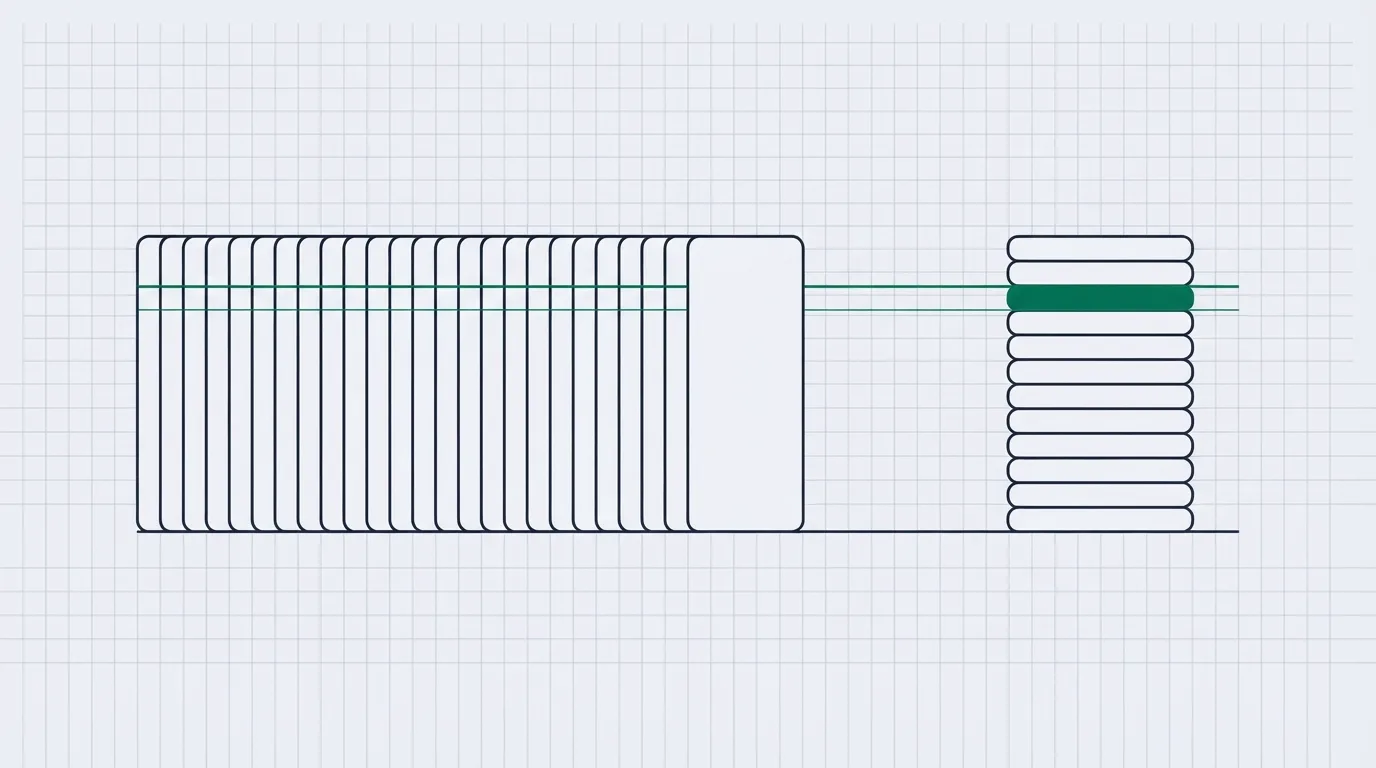
Stripe's monitoring guide says Visa compares disputes and fraud reports with captured payments in the same calendar month. The count adds disputes (TC15) and early fraud warnings (TC40). A payment in both reports is counted twice. Type how many of those payments you have, and the form includes that second count.
Checkout.com writes the ratio as TC15 plus TC40, minus exceptions, divided by settled transactions. Visa's 2025 fact sheet is the program document from the network. The rows below are Stripe's summary for merchants, and this form uses those thresholds.
| Line | Ratio | Count | Where |
|---|---|---|---|
| Early | 0.5% | 5 | Every listed region |
| Excessive | 1.5% | 1,500 | Outside CEMEA |
| Excessive, CEMEA | 2.2% | 150 | CEMEA, plus 75,000 USD |
Both the percentage and the count have to be met. On Checkout.com's current schedule, Asia Pacific, Europe, Latin America and the Caribbean, and North America sit on the lower excessive row, and CEMEA sits on the higher one. Before that schedule, Latin America and the Caribbean was already on the lower row, while Asia Pacific, Europe and North America were on the higher row.
Mastercard's excessive chargeback ratio
Braintree's card-brand FAQ divides chargebacks opened in a calendar month by the prior month's sales count. June's chargebacks use May's sales.
The excessive chargeback program has two tiers. Braintree says the count and the ratio both have to be met.
| Tier | Chargebacks | Ratio |
|---|---|---|
| Excessive Chargeback Merchant | 100 to 299 | 1.50% to 2.99% |
| High Excessive Chargeback Merchant | 300 or more | 3.00% or more |
A 2.5% ratio with only 60 chargebacks is below the count of 100 the first tier requires. A count of 400 at 2% falls short of the higher tier, which starts at 3%, while the lower tier stops at 299 chargebacks.
Mastercard removes the merchant after three consecutive months below the first-tier threshold.
A worked example
Take 8,000 Visa payments captured in October, 35 disputes, 10 fraud warnings and no overlap. The count is 45. The ratio is 0.56%. That count is above the early count in the Visa table, and 0.56% falls between the early percentage and the excessive percentage for a merchant outside CEMEA.
For Mastercard, 120 chargebacks opened in June against 6,000 sales in May come out to 2.0%. The count and that percentage both fall in the first tier, so the tier's two requirements are met.
Run those June chargebacks against the October capture count, using Visa's same-month method, and the ratio comes out to 1.5%. The prior-month sales above are the base Mastercard uses.
Why your dashboard ratio can differ
Stripe's measuring guide says the networks' monitoring programs use dispute activity, counted on the dispute date. Stripe's own dispute rate is counted on the charge date, so a dashboard rate can sit lower than the network ratio.
Braintree counts a chargeback in the month it is raised, which can drop a pile of disputes onto a quiet sales month. One percentage that mixes Visa and Mastercard follows neither formula. A blended dashboard prints that mixed figure.
A win leaves the chargeback in the filing month. Braintree counts it against the ratio regardless of outcome.
If your ratio is near a threshold
Updating the descriptor, setting alerts and making the offer clear are the next steps. How to read a chargeback rate walks through them.
Each merchant account keeps its own Visa ratio when sales are split across more than one merchant ID. The multi-MID routing guide explains that split. We read the program pages and the vendor documentation, then compare them. That method is written up on the methodology page.
My take
I'd judge the month by whether the count and the ratio clear the same row, on Visa and on Mastercard separately. A mixed dashboard percentage is the figure I would set aside until those two are split.
Frequently asked questions
Is a chargeback ratio the same thing as a chargeback rate?
What is the Visa chargeback threshold for 2026?
What puts a merchant in the Mastercard excessive chargeback program?
Does a refund remove a chargeback from the ratio?
Sources

Written by
Dana Rourke
Lead Reviewer
Dana Rourke is the lead reviewer at Campaign Buyer. She covers trackers and attribution on this site: she reads what long-term users report about each tool, checks its documentation and pricing, and verifies prices with the vendor before writing the verdict. Keeping the rankings honest mostly means writing down what the top pick gets wrong, so she does that first.
Last checked 2026-10-24
Comments
No comments yet. Questions and your own experience are welcome.
Thank you. Your comment will appear once it has been reviewed.