A switching guide formedia buyer software
RedTrack alternatives
By Dana Rourke, Lead Reviewer. Reviewed by Campaign Buyer Editorial. Updated 12 October 2026.
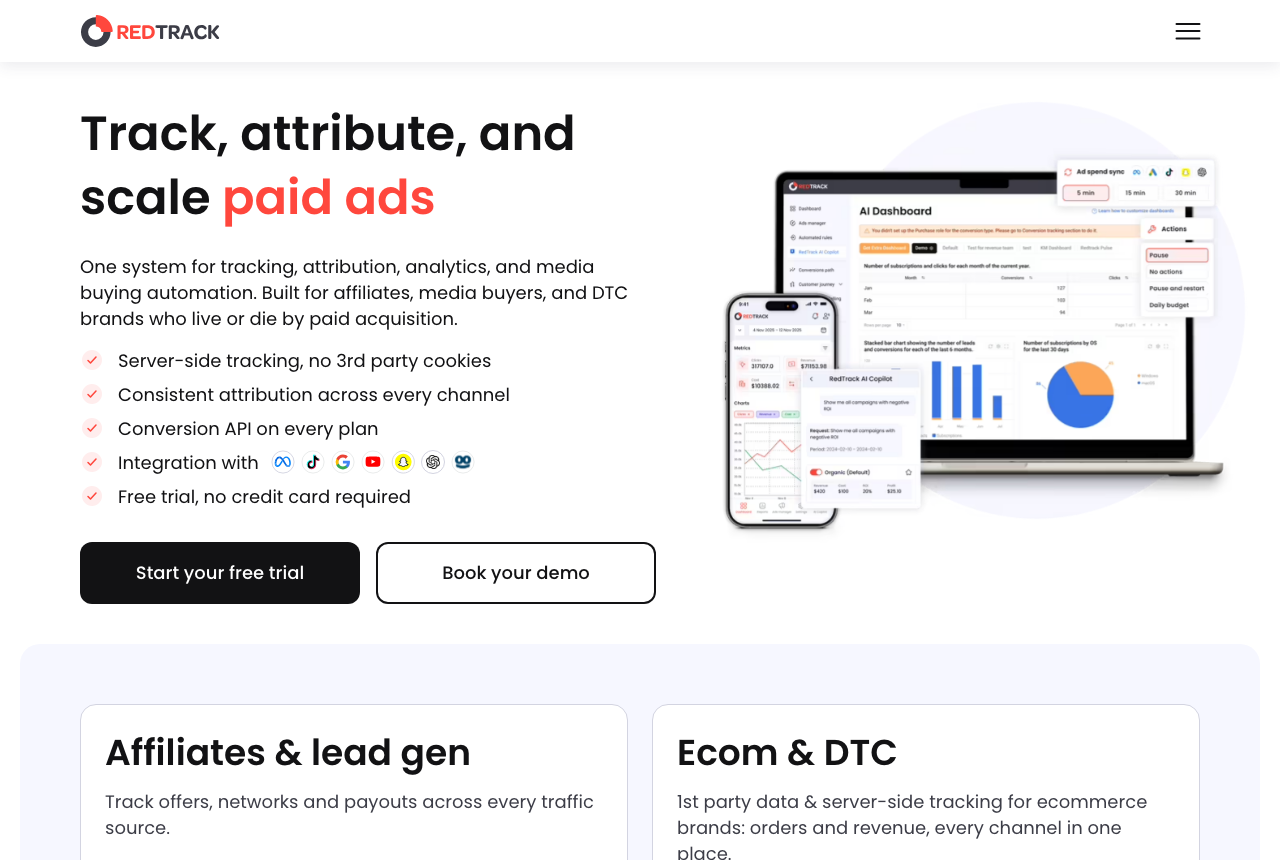
The right alternative to RedTrack depends on why you are leaving it. If your offers close in a funnel you build and host yourself, ElasticFunnels reports those sales and fires the affiliate postbacks from its own checkout, so you may not need a separate tracker at all. If you still need a standalone tracker, Voluum is the closest swap for affiliate campaigns, ClickFlare costs less at low volume, and Binom or Keitaro end the per-event bill by running on a server you rent.
Three complaints send buyers looking at RedTrack competitors. The bill is metered: every click and every conversion is an event, and pop or push traffic runs through a plan's allowance fast. Support is the second, with Trustpilot reviewers describing slow, unhelpful answers while their tracking was broken. The third is the learning curve, since independent reviews call the dashboard advanced and not always intuitive and say reports can load slowly.
Here is what you are leaving. Solo lists at $169 a month for 5M events and one user, Team at $399 for 20M events and five users, and Enterprise at $999 for 75M. A Black Friday offer takes 30% off yearly billing, and RedTrack says the lower price holds when you renew. Past the allowance nothing switches off: extra events cost $0.04 per 1,000 on Solo, $0.035 on Team and $0.025 on Enterprise. Ecommerce brands are billed by tracked revenue instead, starting from a free Relay plan.
Before you move, list what the replacement has to match. Every paid RedTrack plan sends conversions to Meta, Google, TikTok and five more ad platforms through their conversion APIs, syncs ad spend at ad level, and runs both redirect and direct tracking. The cloud trackers below cover most of that. The self-hosted ones do too, but the server, its uptime and its speed become your job.
Still comparing? Read our full RedTrack review first, then come back to these.
Quick answer
The best alternative to RedTrack is ElasticFunnels. RedTrack is a standalone tracker you point at any offer on any domain. ElasticFunnels is a funnel platform, not a tracker: it builds and hosts the funnel, and its analytics report first-party sales while its checkout fires affiliate postbacks on purchase, refund, chargeback and rebill. If every offer you run closes in a funnel you host, that reporting can cover the job a separate tracker would. If you send traffic to offers that close on someone else's page, it sees none of it, so it is no substitute for RedTrack there.
The shortlist
- 1. ElasticFunnels is the best RedTrack alternative for sellers whose offers close in a funnel they run, so conversion postbacks come built in.
- 2. Voluum is the best RedTrack alternative for affiliate buyers on Meta and native who want the cloud tracker most traffic sources and networks already plug into.
- 3. ClickFlare is the best RedTrack alternative for buyers under a million events a month who want a smaller entry bill and a migration done for them.
- 4. Binom is the best RedTrack alternative for pop, push and native buyers whose overage keeps growing and who want a flat license with no click cap.
- 5. Keitaro is the best RedTrack alternative for the self-hosted route at the lowest license cost, with your data and your team's seats on a server you control.
- 6. FunnelFlux is the best RedTrack alternative for multi-step funnels you want to see drawn as a map of every lander and offer.
- 7. BeMob is the best RedTrack alternative for beginners who want a free tier to learn tracking on before they pay.
- 8. AnyTrack is the best RedTrack alternative for store owners who mainly need conversions sent back to Meta, Google and TikTok without a developer.
Compared at a glance
| Tool | From |
|---|---|
| 1. ElasticFunnels | $97/mo |
| 2. Voluum | $119/mo |
| 3. ClickFlare | $69/mo |
| 4. Binom | $104/mo |
| 5. Keitaro | €40/mo |
| 6. FunnelFlux | $99/mo |
| 7. BeMob | Free tier |
| 8. AnyTrack | Free tier |
The alternatives, ranked
1. ElasticFunnels
Best RedTrack alternative for sellers whose offers close in a funnel they run, so conversion postbacks come built in
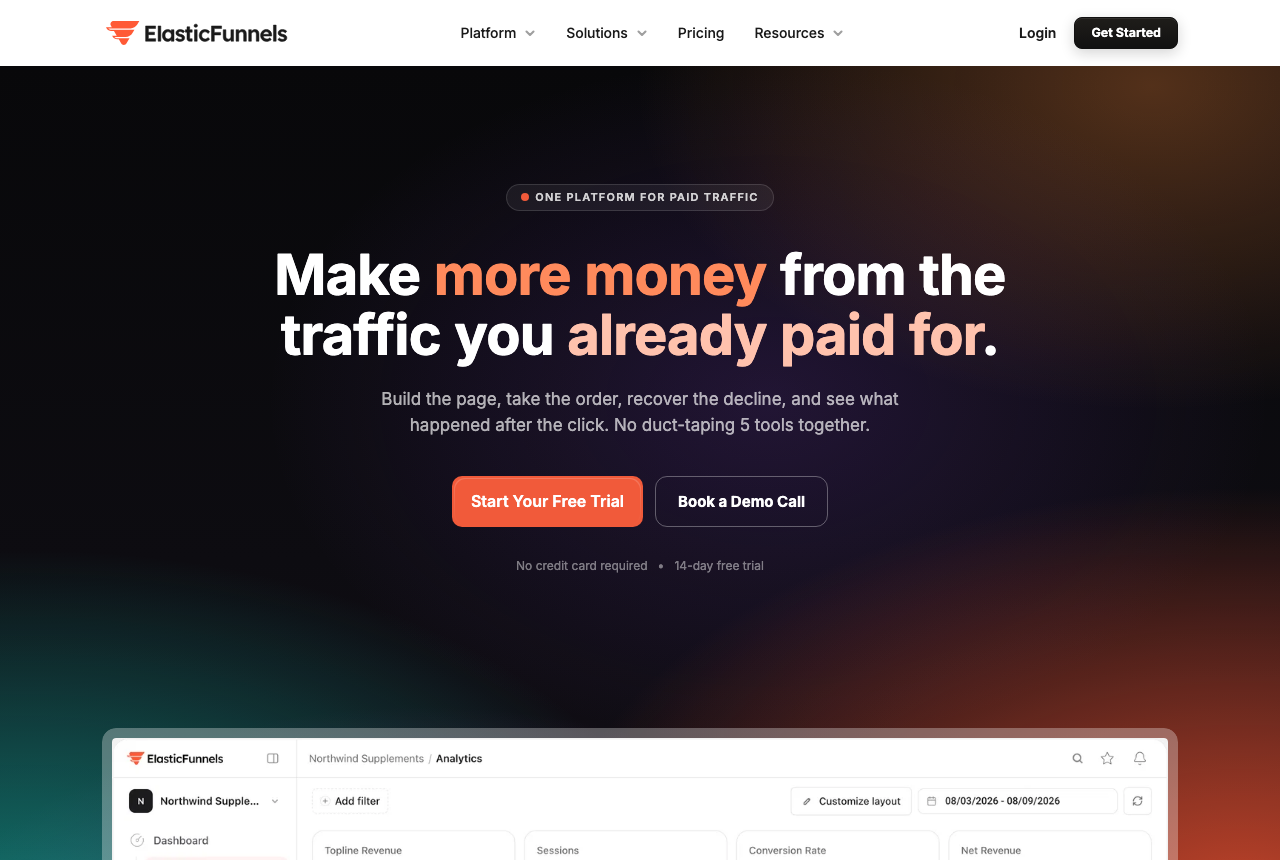
RedTrack is a standalone tracker you point at any offer on any domain. ElasticFunnels is a funnel platform, not a tracker: it builds and hosts the funnel, and its analytics report first-party sales while its checkout fires affiliate postbacks on purchase, refund, chargeback and rebill. If every offer you run closes in a funnel you host, that reporting can cover the job a separate tracker would. If you send traffic to offers that close on someone else's page, it sees none of it, so it is no substitute for RedTrack there.
What works
- Replaces the stack a growth team usually stitches together: a funnel builder, a checkout or CRM, a testing tool and an analytics tool, so a click, an order, a rebill and a refund sit on one record you never have to merge by hand
- Its strongest feature is split testing under one URL: variants rotate server-side behind a single campaign link, so Meta, Google and TikTok keep the data they have learned and a new test does not send the ad back for review
- The AI builder writes a page of any type from a prompt, and the cloner turns a competitor URL into a working copy in about a minute
- Its checkout takes Stripe, NMI, PayPal, Klarna or Authorize.net, splits sales across several NMI merchant accounts by weight, card brand, product and daily cap, and builds in order bumps, one-click upsells and subscription dunning
- The analytics view puts sessions, orders, rebills and refunds on one timeline, sliced by affiliate, geo, device or creative, and a built-in CRM and call center work off the same records
- A trial tests the whole tool because nothing is gated behind a higher tier: plans differ only by the traffic volume they allow
What to watch
- Multi-MID routing, the standout in its checkout, works across NMI merchant accounts only and pays off only if you already hold several to route between. A seller on a single Stripe account still gets the pages, the testing, the analytics and the CRM, but not that routing advantage
- It is not a merchant of record like Paddle: it will not file your sales tax or carry dispute liability, so that work stays with you and your processors
- The 0.5% checkout fee applies to revenue through its hosted checkout, on top of the monthly plan and your own processor fees, though sales on external networks like ClickBank or BuyGoods are not charged
The catch
ElasticFunnels is newer than the tools on this page, and there is very little independent third-party review coverage to check its claims against. Until you run real volume through it, you are largely taking the vendor's word for it. Work on it started in 2023, so it has had far less time than its rivals to collect user reports. The 14-day trial needs no card, so you can test the features on your own traffic before you pay.
Read the full ElasticFunnels review.
2. Voluum
Best RedTrack alternative for affiliate buyers on Meta and native who want the cloud tracker most traffic sources and networks already plug into
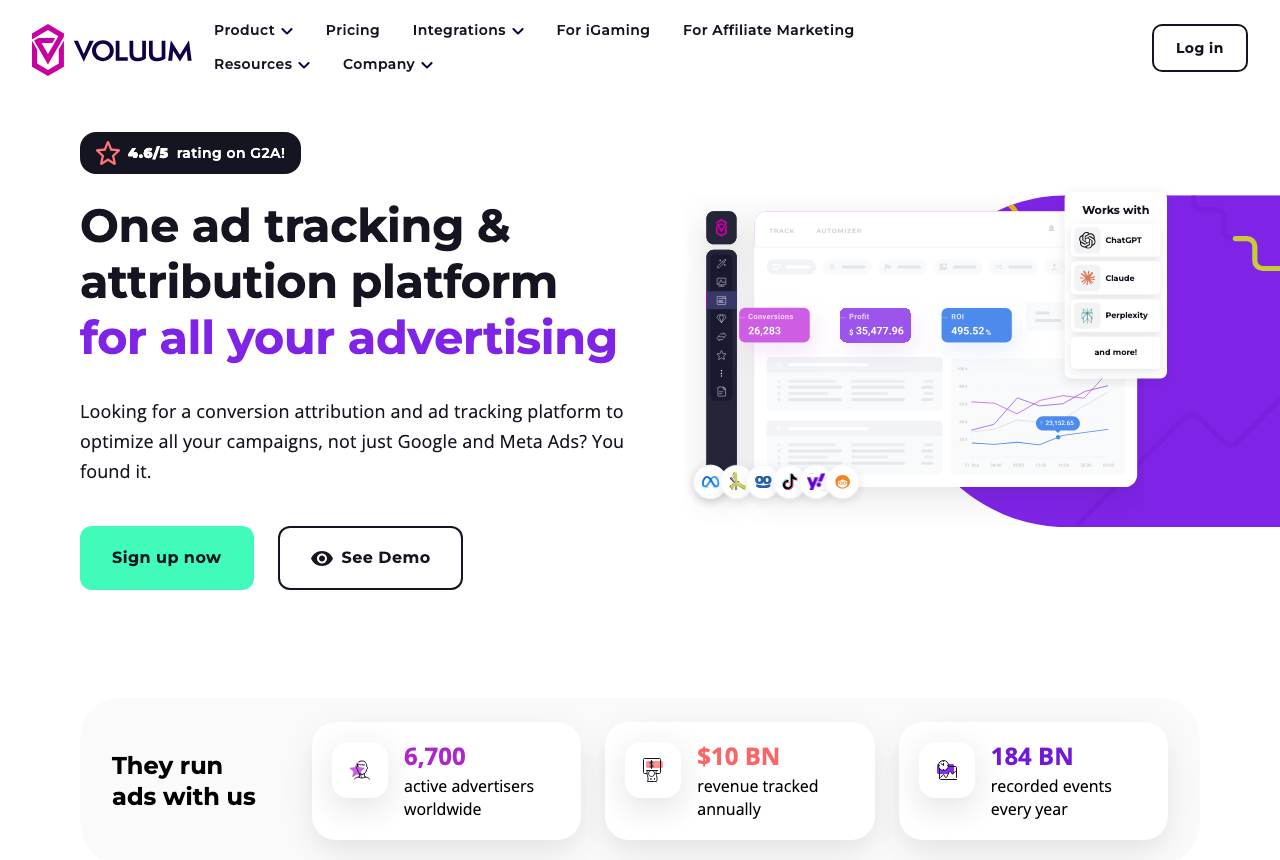
Voluum is the pick if you run affiliate or native campaigns and want the proven, low-friction tracker other buyers already use, provided you can absorb the price.
What works
- The default recommendation for Meta and native affiliate traffic, so setups and integrations are well documented
- Fast redirect and reporting infrastructure that holds up at volume
- Anti-fraud and traffic-distribution rules come standard
What to watch
- The most expensive mainstream tracker: $119/mo billed annually to start, $299 to reach 5M events
- Event overages are billed on top, so costs are hard to predict as traffic grows
- You pay for polish you may not need if your funnels are simple
Read the full Voluum review, or put the two side by side in RedTrack vs Voluum.
3. ClickFlare
Best RedTrack alternative for buyers under a million events a month who want a smaller entry bill and a migration done for them
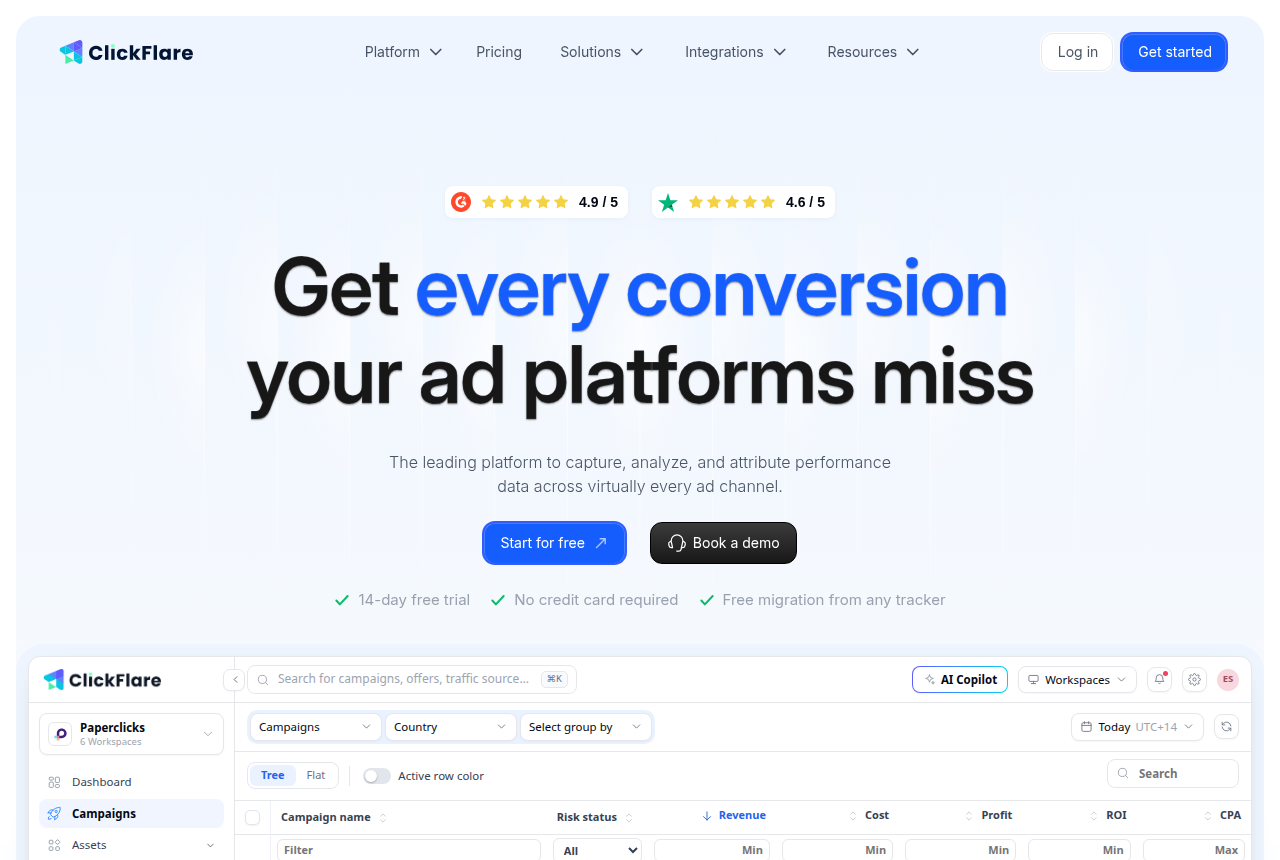
ClickFlare is real. It is an established cloud tracker, running since 2021 and used by 3,500-plus media buyers, and it does what Voluum and RedTrack do: server-side capture, CAPI to Meta, Google and TikTok, and spend pulled in so you can compute ROI, all for one flat monthly price. You are unlikely to regret it if you run the 14-day no-card trial against your ad platform's own numbers first. The one real caveat is thin public proof, so the trial will tell you more than the review scores can.
What works
- Cost sync and CAPI come with every tier, Starter included. You pull your spend in, compute ROI and send conversions to Meta, Google and TikTok server-side, without a paid upgrade and without handing over a cut of your budget.
- Flat pricing that undercuts Voluum on the same event model. The vendor says the price has not risen since it launched in 2021, and there is no percentage of your budget layered on top.
- Server-side capture with both redirect and direct tracking, so a blocked pixel or an iOS restriction does not silently drop the form fill or the sale.
- Free done-for-you migration and fast human support are the two things public reviewers single out most, alongside a setup that is smoother than trackers usually are.
- A real 14-day trial with no card, plus a 99.99% uptime record since January 2021, so you can prove the tracking on your own traffic before you pay.
What to watch
- Thin independent proof. A couple of dozen Trustpilot reviews, all five-star, and little organic Reddit discussion. Trustpilot itself flags that the sample may not be representative, so the trial is your real due diligence.
- Everything counts as an event. Every visit, click, conversion and postback draws down one limit, so high-volume pop or push traffic burns the cap faster than the plan names suggest. Estimate your real event count before you pick a tier.
- Spend data lags on the lower tiers. Starter and Pro refresh hourly and Master every 30 minutes, with near-real-time updates a paid add-on. On fast-moving campaigns, an hour-old ROAS can mislead you.
- Less battle-tested at extreme scale than Voluum. For the heaviest automation rules and deepest anti-fraud, the older incumbents still have the longer public track record.
- Billing is charged in advance and is generally non-refundable, and you cancel inside the account rather than by asking support. Export your data before you leave.
Read the full ClickFlare review, or put the two side by side in RedTrack vs ClickFlare.
4. Binom
Best RedTrack alternative for pop, push and native buyers whose overage keeps growing and who want a flat license with no click cap
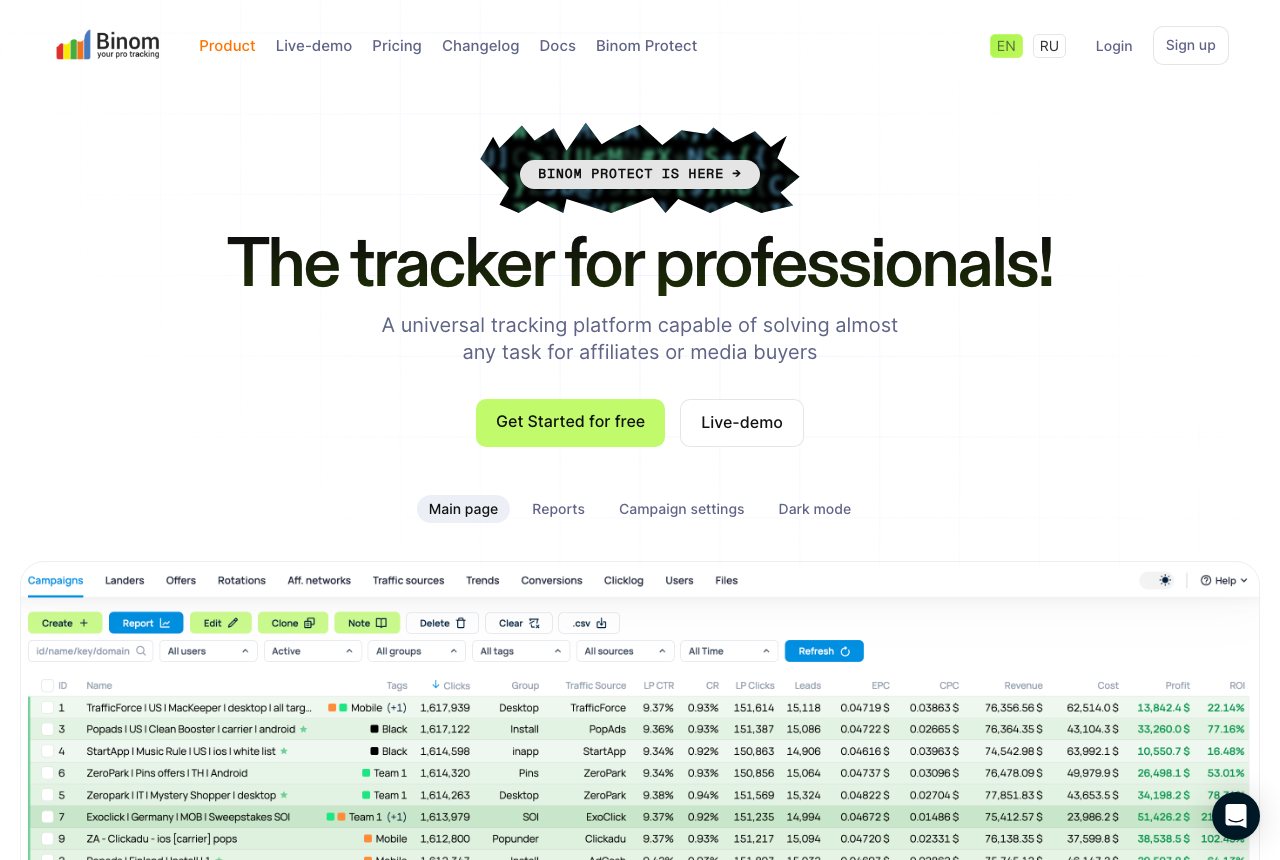
Binom is the pick if you push high volume, want to own your data, and have someone who can run a server.
What works
- Self-hosted, so your data stays on your own infrastructure and there is no per-event tax
- Flat license with no click cap, at $149 a month or $104 billed yearly. The cloud plan is $299 a month, server included, capped at 2 million clicks a day
- Built for speed at pop, push and native volumes where cloud trackers get expensive
What to watch
- You run the server, including updates, uptime and scaling
- The setup is the most technical of any tracker here
- Support and onboarding assume you already know postbacks and tokens
Read the full Binom review, or put the two side by side in RedTrack vs Binom.
5. Keitaro
Best RedTrack alternative for the self-hosted route at the lowest license cost, with your data and your team's seats on a server you control
Keitaro is real, and it is one of the most established self-hosted trackers media buyers run: its maker Apliteni has shipped it for years and says more than 4,000 businesses use it. If you buy paid traffic at volume, want to own your data, and are comfortable running a Linux server, you are unlikely to regret it. The catch is the model. It is self-hosted only, so you rent and maintain your own VPS. There is no free trial, so trying it means buying a license. And when server-side tracking breaks, the loudest complaint is that support can be slow to resolve it. Use the live demo and one small campaign to prove it before you commit.
What works
- Self-hosted, so your click data lives on hardware you control and nothing meters your events. The license costs the same whatever your click count, which is the main reason high-volume pop, push and native buyers pick it over event-priced cloud trackers like Voluum and RedTrack.
- Deep traffic routing and filtering. It splits visitors to different landing pages and offers by GEO, device, OS, browser, connection and source ID, across 35+ tracking parameters, so one tool handles the tracker, the routing and lander rotation.
- Server-side postbacks and conversion sync on every individual plan. It fires S2S postbacks and sends conversions back to Meta, Google and TikTok through their APIs, and pulls ad spend in so reports show real cost and ROI.
- Support and price are what long-term users praise most. Across Trustpilot the repeated note from people running it for one to several years is fast, knowledgeable help and a low price relative to cloud trackers.
- A built-in landing page editor, custom domains with SSL, and bot filtering, so there are fewer separate tools sitting between your tracker, your lander and your offer.
What to watch
- Self-hosted only, and that is the real cost and the real risk. You rent a clean Linux VPS (CentOS 9 or 10 Stream, 4GB RAM minimum), and keeping it fast, patched and online is your job. There is no cloud version, so if server operations are not your thing, a managed tracker like RedTrack or Voluum fits better.
- No free trial. To try it properly you buy a license, though there is a public live demo and a refund policy. That is more commitment up front than the card-free trials most cloud trackers offer.
- When tracking breaks, resolution can be slow. The sharpest critical review reports 502 errors on server-side conversion tracking and inaccurate cost attribution, with support acknowledging the problem but giving no timeline for a fix, which for a media buyer means daily lost optimization while it is open.
- A real learning curve. DNS, SSL, Cloudflare settings, server load, PHP-FPM tuning and postback debugging are all on you, and reviewers who like the tool still say the number of settings and reports can overwhelm a beginner.
- Live chat runs on weekday hours, about 06:00 to 16:00 GMT, so a launch that breaks overnight in your timezone waits until the next window.
Read the full Keitaro review, or put the two side by side in RedTrack vs Keitaro.
6. FunnelFlux
Best RedTrack alternative for multi-step funnels you want to see drawn as a map of every lander and offer
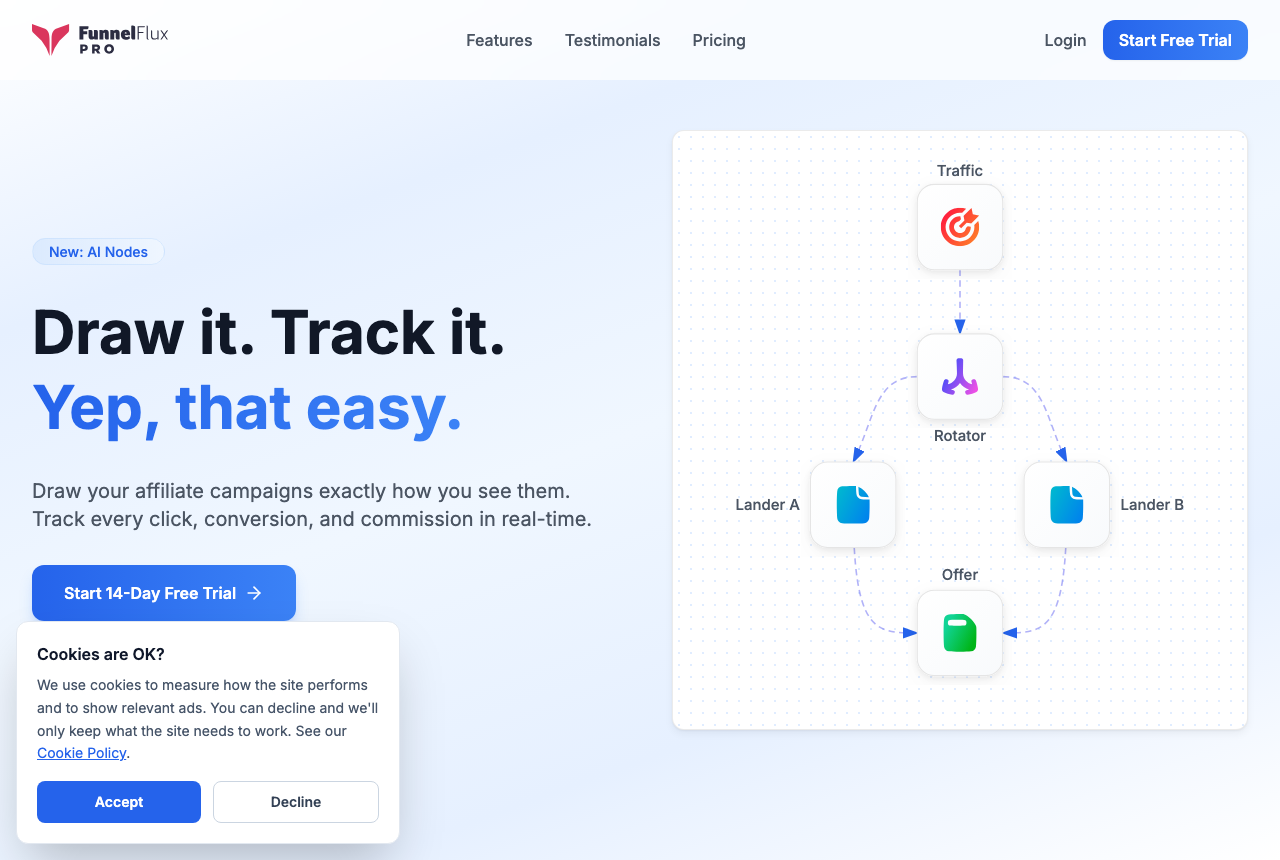
FunnelFlux Pro is the pick if you run multi-step funnels and want to see the whole journey as a map instead of a table of clicks.
What works
- A visual funnel canvas: landers, offers, rotators and conditional routing wired together on one screen
- Node-level reporting shows exactly where a funnel leaks
- Predictable pricing: a $99/mo base plus $10 per extra million events
What to watch
- Expect a learning curve: the routing options take real setup time to master
- Automatic cost sync needs a separate product, Argosync
- A smaller community than Voluum or RedTrack, so fewer guides when you get stuck
Read the full FunnelFlux review, or put the two side by side in RedTrack vs FunnelFlux.
7. BeMob
Best RedTrack alternative for beginners who want a free tier to learn tracking on before they pay
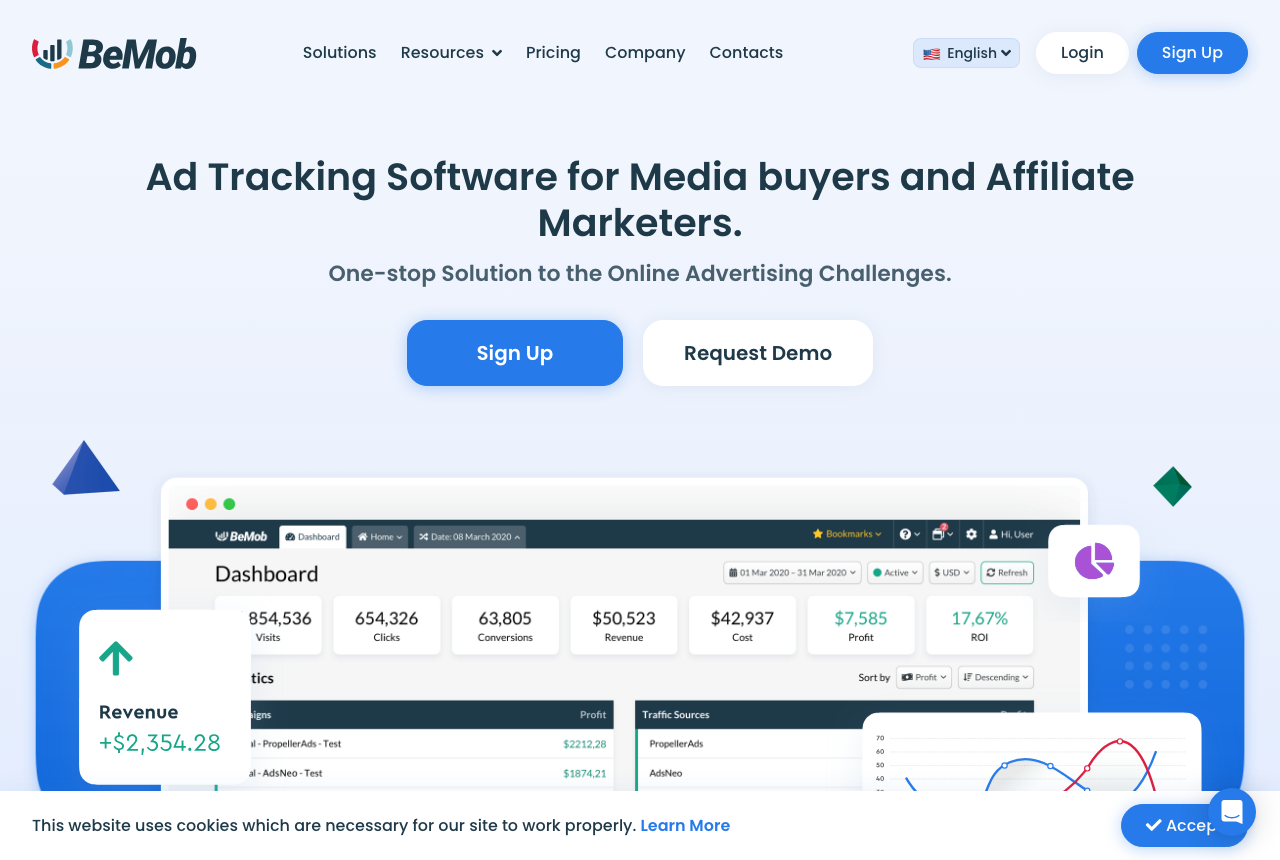
BeMob is the pick if you are new to tracking or spending lightly and want a real free tier before you commit.
What works
- A genuinely usable free plan: 100K events, 10 campaigns and real reporting
- Cheap paid entry at $49/mo for 1M events
- Cloud-hosted, so there is nothing to install or maintain
What to watch
- 100K free events disappear fast once you log impressions or run any volume
- Custom tracking domains only start on the $249 Business plan
- Less depth than Voluum or RedTrack once you scale past testing
Read the full BeMob review.
8. AnyTrack
Best RedTrack alternative for store owners who mainly need conversions sent back to Meta, Google and TikTok without a developer
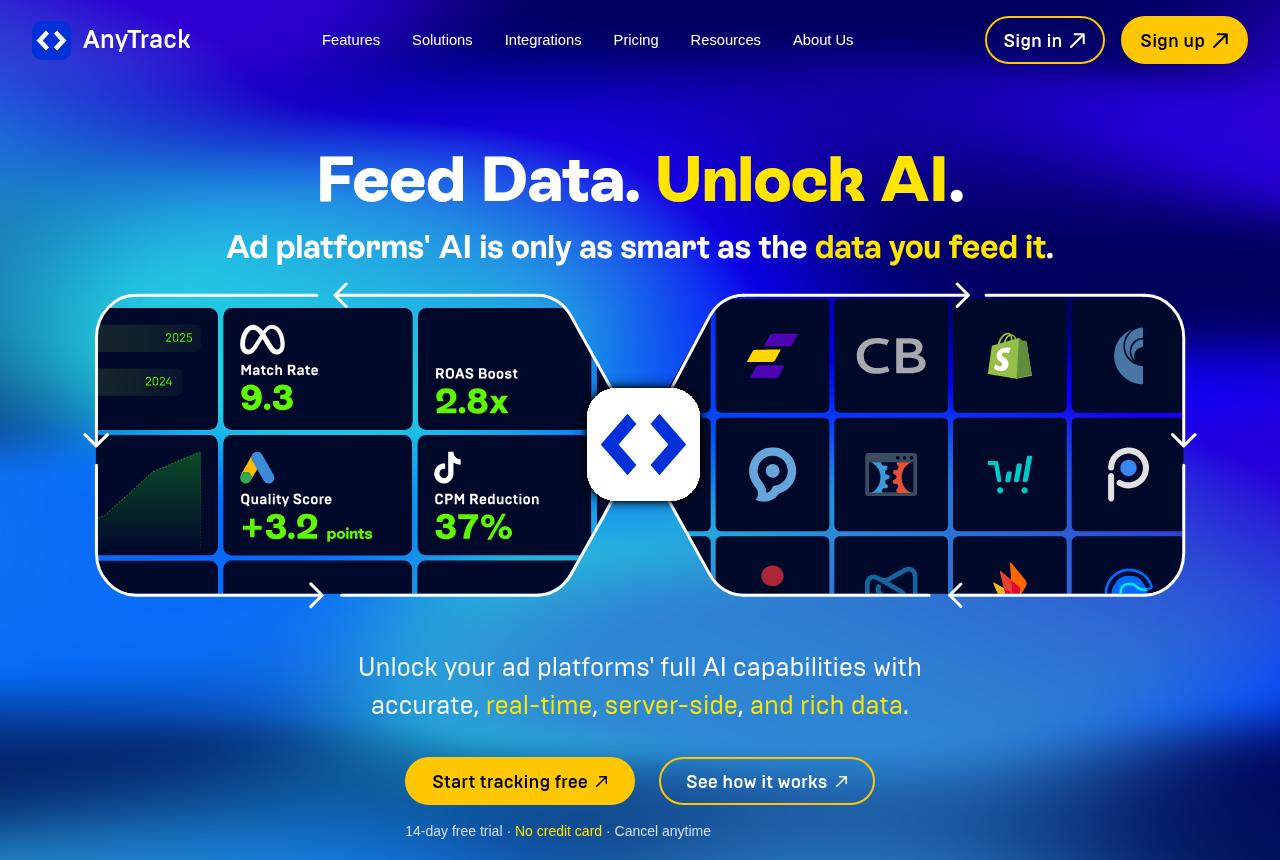
AnyTrack is the pick if you run paid traffic to a Shopify store or affiliate offers and want conversions fed back to Meta, Google and TikTok without wiring server-side tracking yourself. Test the support and watch the session-based bill before you commit.
What works
- No-code setup. You connect the tag and your ad accounts from a dashboard instead of standing up a server-side Google Tag Manager container.
- Server-side and client-side tracking run together, so a blocked pixel or an iOS restriction does not silently drop the conversion.
- Feeds conversions back to seven ad platforms through the Conversion API, and covers 90+ affiliate networks, ecommerce platforms and CRMs out of the box.
- A real free plan and a 14-day trial with no credit card, so you can prove the tracking before you pay.
What to watch
- Support and billing draw the most complaints. Unanswered tickets and trial-cancellation disputes recur across Trustpilot and PPC threads, so test support inside the trial.
- Thin independent proof. Two reviews on G2 and 3.4 out of 5 from eleven reviews on Trustpilot make it hard to sanity-check against the crowd.
- Session-based pricing with automatic overage. A traffic spike pushes you past your cap and bills $0.20 to $0.40 per 1,000 extra sessions depending on the plan, and you cannot switch it off on a paid plan.
- No automatic ad-spend sync. Unlike RedTrack or Voluum it does not pull your cost in, so ROI across sources has to be computed somewhere else.
Read the full AnyTrack review, or put the two side by side in RedTrack vs AnyTrack.
My take
If the event bill is why you are leaving, I would start with Binom: add up your clicks and conversions for the last three months and see what they would cost on a flat license with no click cap. That is the clean fix for pop and push volume, and Binom's 14-day trial has no traffic limits. If support or setup is the problem, I'd open ClickFlare's no-card trial, let its team move your campaigns, and judge it by whether its numbers agree with your ad platform before you cancel RedTrack. I would skip Voluum as a way to save money: it costs more than RedTrack once you pass about 1.4 million events a month, so pick it for its integrations and its standing with affiliate networks.
How we evaluated these
We ranked these using the same rubric as the incumbent: we read what long-term users report about each one, checked its documentation and pricing, and verified prices with the vendor before reaching a verdict. The order shows which option fits the largest group of RedTrack users. Where an alternative wins only for a specific traffic source or team size, we say so on that card. Our methodology page sets out the full process.
Frequently asked questions
What is the best alternative to RedTrack?
Who are RedTrack's main competitors?
Is there a cheaper alternative to RedTrack?
Does RedTrack have a free plan?
Is self-hosting a tracker worth it instead of RedTrack?
Changelog
- 12 October 2026: Re-read RedTrack's pricing page: the Builder plan is gone, and the Solo, Team and Enterprise allowances and overage rates now match the intro. Rewrote the intro to answer which alternative fits which reason to leave, gave Voluum, ClickFlare, Binom and Keitaro each their own reason to switch, linked each pick to its head-to-head, and added the FAQ, the take and this changelog.
- 8 September 2026: First published.
Sources
From RedTrack
Other sources
10 discussions and reviews read for this page. Quotes are excerpts; open a link to read the original in context.
- [r1] How to Setup Facebook Pixel Conversion API + Event Deduplication
- [r2] Has anyone been getting a deduplication Pixel error?
- [r3] Need help regarding setting up CAPI
- [rt-home] RedTrack homepage
- [rt-events] Plans and Pricing
- [rt-accounts] Plans and Pricing compare table
- [rt-capi] Plans and Pricing trial line
- [rt-addons] Plans and Pricing trial add-ons
- [rt-help-event] What qualifies as an event
- [rt-nocard] RedTrack vs BeMob

Written by
Dana Rourke
Lead Reviewer
Dana Rourke is the lead reviewer at Campaign Buyer. She covers trackers and attribution on this site: she reads what long-term users report about each tool, checks its documentation and pricing, and verifies prices with the vendor before writing the verdict. Keeping the rankings honest mostly means writing down what the top pick gets wrong, so she does that first.
Last checked 2026-10-12
Comments
No comments yet. Questions and your own experience are welcome.
Thank you. Your comment will appear once it has been reviewed.